Greener Power Solutions rents out mobile batteries that replace or downsize diesel generators wherever a site needs more power than the grid can supply: construction sites, events, delayed grid connections and EV charging. Founded in the Netherlands in 2014, it runs a fleet of 250+ batteries in more than 12 European countries.
About Greener Power Solutions
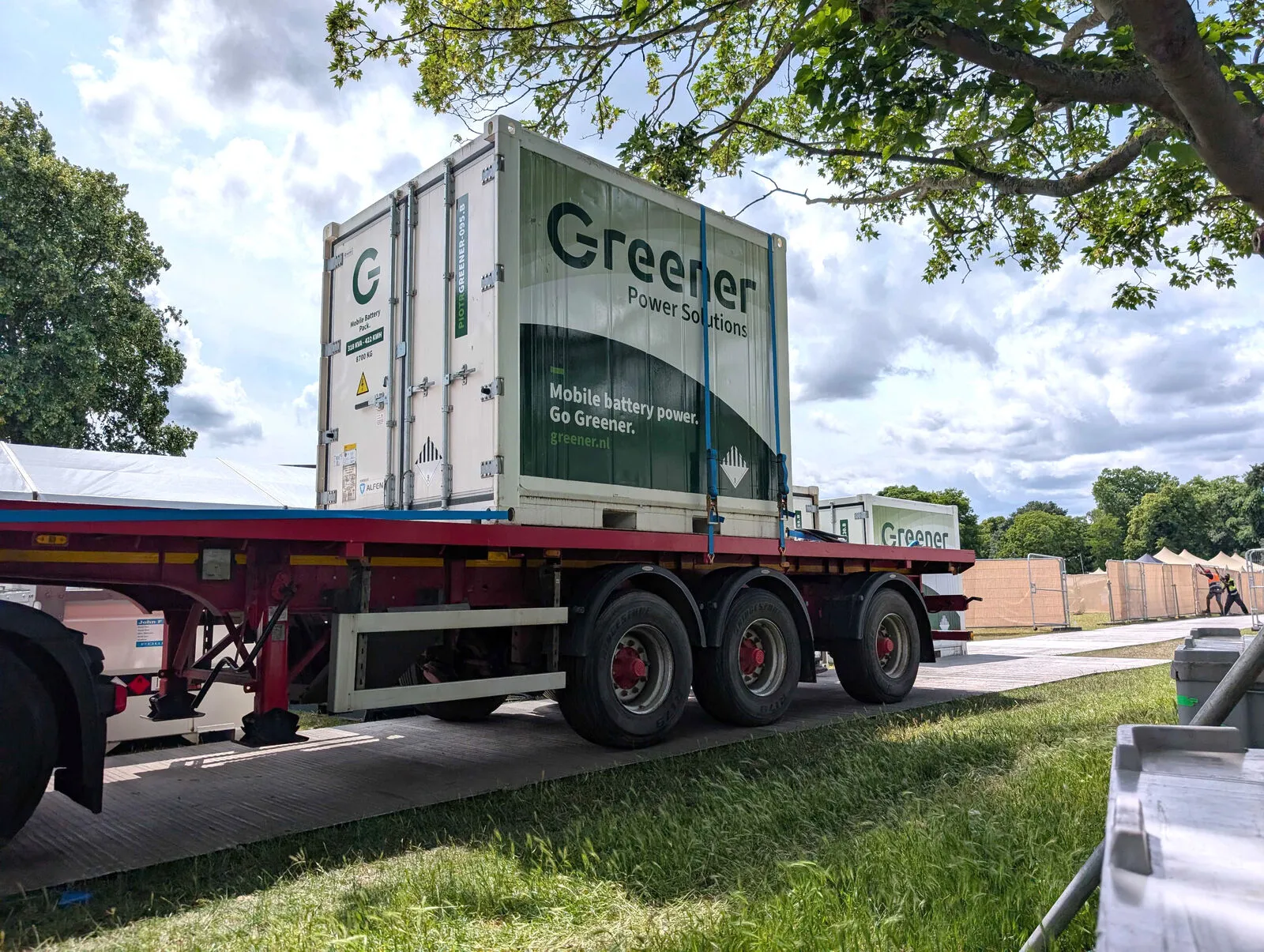
Greener Power Solutions started in 2014, when its founders noticed at one of the largest festivals in the Netherlands how poorly the power for lighting, sound and food trucks was optimised. They then saw the same problem on construction sites: diesel generators running inefficiently and creating needless emissions. Today Greener has more than 80 people, 250+ mobile batteries in what it describes as Europe's largest rental fleet, and more than 1,000 projects completed in the last five years. It is headquartered in Amsterdam, with a depot in Barneveld and an office and depot near Bristol for the UK. Its standard units deliver 318 kVA and 422 kWh, can be linked in parallel, and combine with the grid, solar, wind, hydrogen or generators. The lithium-ion batteries were developed with BMW and Northvolt. Greener works directly with contractors, event organisers, grid operators and businesses, and through rental companies such as Sunbelt Rentals, LoxamHune and Godik.
They also worked with Greener Power Solutions
Sunbelt Rentals
Power Electrics
Wernick Power Solutions
John F Hunt Power
What Greener Power Solutions has delivered
CareysConstruction
Powering tower cranes with a battery and a smaller generator
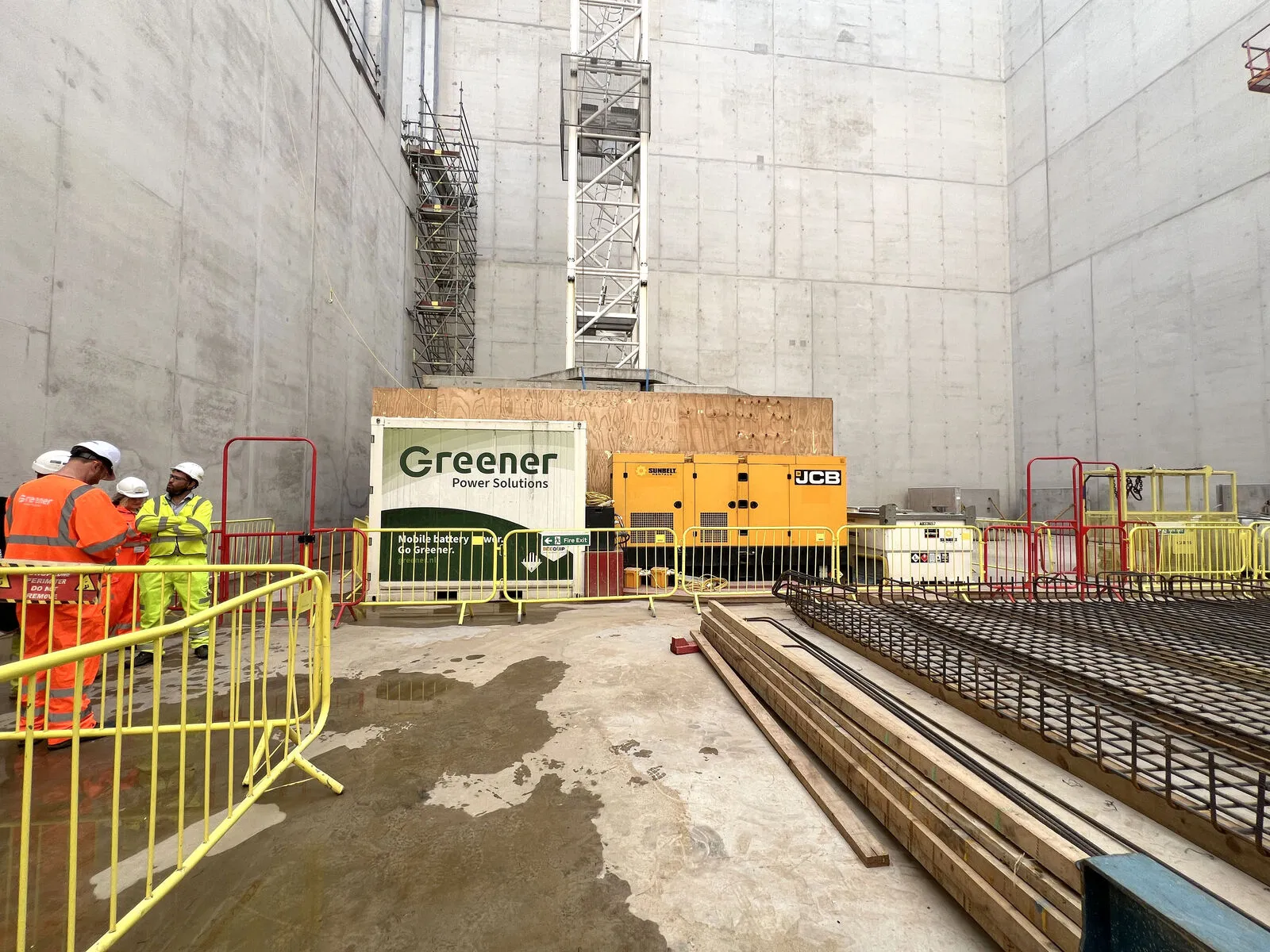
Tower cranes need very high inrush currents for heavy lifts but little power the rest of the day, so they are usually paired with a large diesel generator that idles at low load. With Sunbelt Rentals, Greener combined a 318 kVA / 422 kWh battery with a 300 kVA generator. The battery covers the lift peaks; its energy management system starts the generator at 35% state of charge, runs it at 80% load to recharge, then switches it off. Results below are from an 800 kVA comparison, December 2024 to July 2025.
For a new drinking water reservoir and pumping building in Beuningen (NL), the team chose to drive the foundation piles with a converted electric piling rig. The rig needed 1,100 amps; the site connection delivered 125. Greener linked three mobile batteries, 1,270 kWh in total, that handled the piling peaks while recharging continuously from the grid, with a low-emission generator from Bryntell connected for extra reliability. The foundation work was carried out fully electrically, with no power interruptions.
Running mobile MRI and CT scanners on a small grid connection
At a UK healthcare site, two mobile scanners and a treatment unit were first powered by a 500 kVA generator, because the local grid connection looked too small for the scanners' start-up currents. A Greener battery in a hybrid setup first cut the generator to 275 kVA and allowed silent nights. Data from Greener's energy management system then showed much lower start-up and running currents than the electrical design assumed, so the site moved to peak shaving on a 50-amp, three-phase grid supply, with no generator.
Five off-grid hybrid setups for a world championship
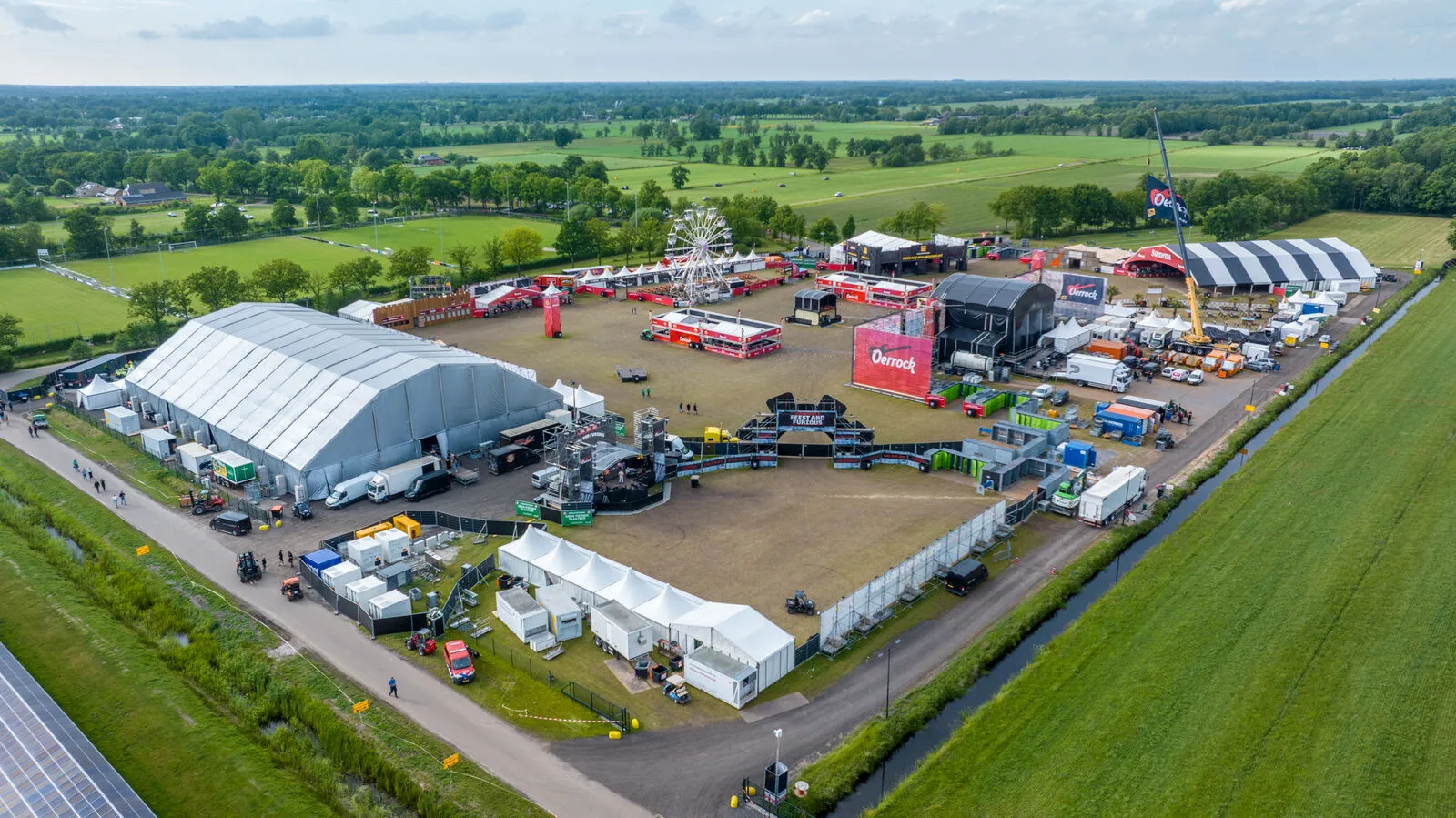
The grid connection at the Bosbaan in Amsterdam was already used to its limit when the Staatsloterij World Rowing Championships took place there in August 2026. Commissioned by The Powershop, Greener placed five hybrid battery setups at the catering square, VIP area, finish, main grandstand and rescue island, all running off-grid. The batteries supplied the power and the generators only ran to top them up, monitored 24/7 through Greener's EMS. Savings are compared with five 250 kVA generators running continuously.
Keeping a hotel open, and quiet, while it waits for a bigger grid connection
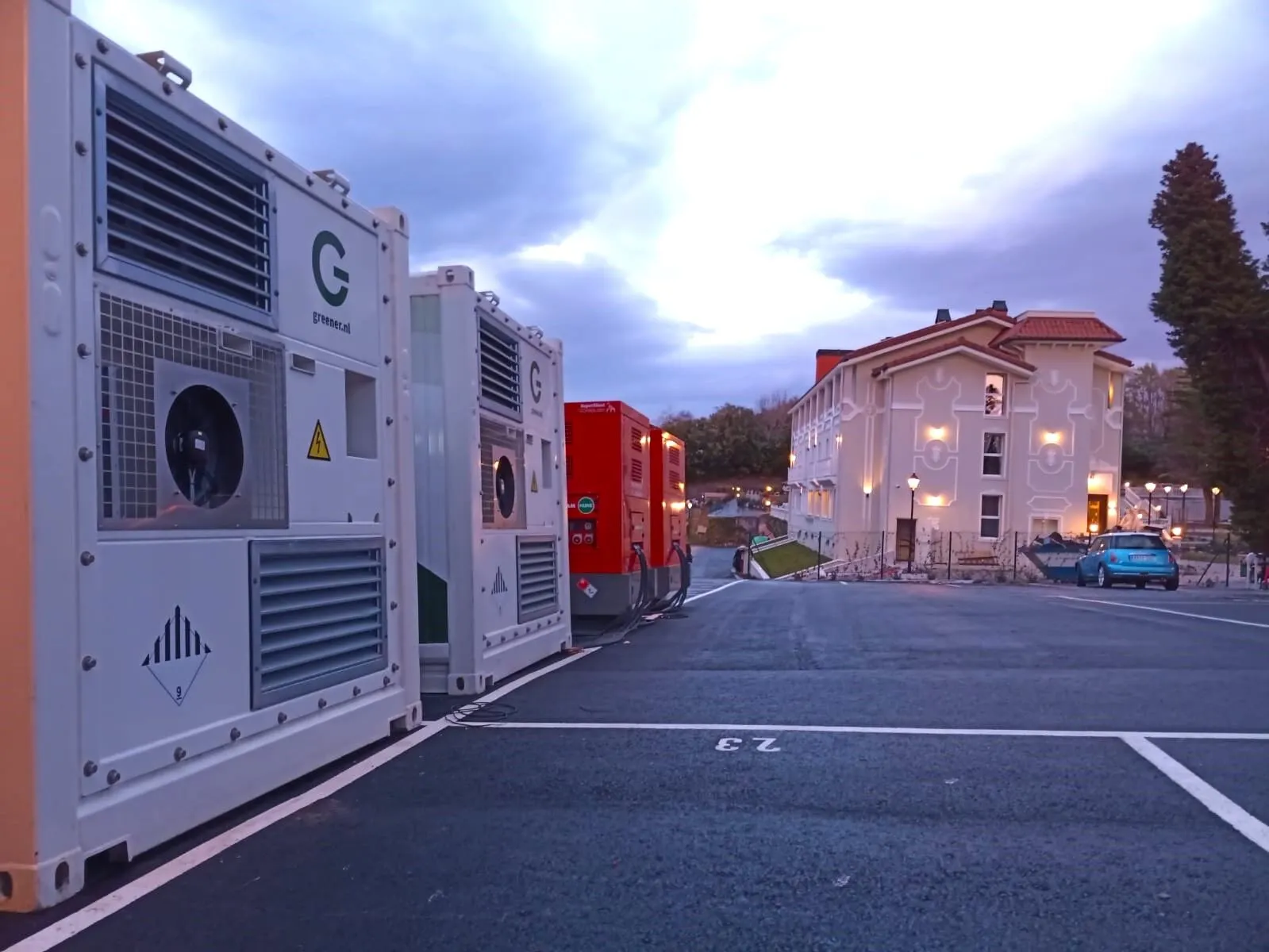
Hotel Luze Boutique in San Sebastián faced a six-month wait for a grid expansion. With rental partner LoxamHune, Greener installed two 422 kWh batteries in a load sharing setup with the existing 90 A connection and two generators. In night mode, the energy management system charges the batteries in the evening, shuts the generators down and lets the batteries power the hotel silently until morning, so guests are not disturbed.
Solar and battery power for a hydrogen station in a natural park
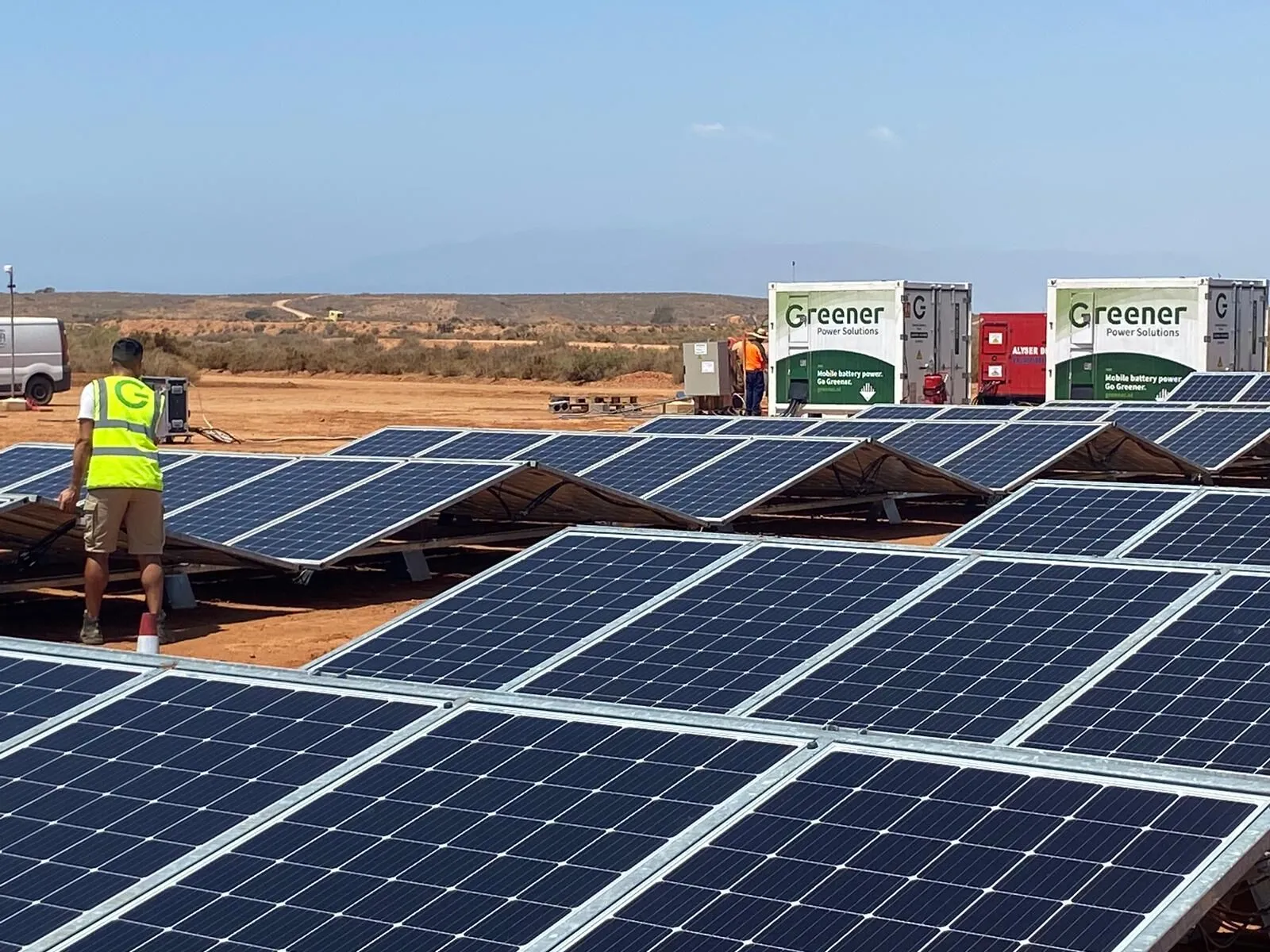
At Michelin's 4,500-hectare testing centre near the Cabo de Gata-Níjar natural park in Spain, a car maker needed a hydrogen charging station to test a prototype, with cooling and monitoring that could never lose power. With GCK Energy, Greener installed two batteries in a load sharing setup fed by two 70 kWc mobile solar fields, with a backup generator that would only start if power failed. It was never needed during the 11-week project.
“Door het gebruik van twee Greener-batterijen konden we zowel het verbruik van dieselbrandstof als het aantal draaiuren van de generator verminderen. Daarnaast hebben we het werkelijke energieverbruik gemeten, wat we kunnen gebruiken om de energieplanning voor toekomstige evenementen te optimaliseren.”
Willem de Leeuw,Owner and project leader, Lion Event Support
“Vanwege de uitbreiding van onze parken hebben we krachtigere netaansluitingen nodig, die een lange levertijd hebben. Daarom werken we graag samen met Greener voor een duurzame, en vooral schone, tijdelijke stroomvoorziening totdat we volledig op kabel zitten.”
Giel Hendrikx,Innovation Manager, EuroParcs
“I knew that we needed to work with Greener on this project from the day I received the initial brief. Having known multiple members of the team at Greener for a long time, I knew we could rely on their expertise. As expected, they went above and beyond to deliver what was requested to make the event a success. It’s very impressive what Greener Power Solutions can deliver.”
One day, real numbers. Meet the companies turning carbon strategy into measurable savings — and benchmark yours against Belgium's sustainability leaders. Seats are limited.
Real ROI case studies — companies saving up to €94k/year
Benchmark your climate strategy against 100+ industry peers
Leave with an actionable, board-ready reduction roadmap