Trevi is a Belgian environmental technology group that treats industrial wastewater and waste gas and builds renewable energy installations for companies and public bodies. Its 200+ experts take each project from study, lab tests and pilot to design, build and day-to-day operation.
About Trevi
Trevi was founded in 1992 in Menen by engineers Stefaan Deboosere and Jacky Mortelmans, together with Peter and Frank Vandeputte, and has grown into an environmental technology group with more than 200 experts. It is headquartered in Gentbrugge (Ghent), with offices in Grobbendonk and Roncq (France), and has delivered projects for Yara, Ford, Toyota, Umicore, FrieslandCampina, Unilin, Aquafin, Ardo and Galloo, in Belgium and abroad. Its in-house lab and pilot units back every design. The group also includes the brands Ipec (odour control, more than 500 plants, mainly in the Middle East) and Bete (exhaust gas treatment), the energy supplier Trevion and sister company BiogasTec. Trevi has installed more than 110 ethylene oxide abatement systems worldwide over 30 years. It works to ISO 9001, ISO 14001 and VCA and holds an EcoVadis Bronze medal.
What Trevi has delivered
Yara TertreChemicals
One central wastewater plant for a whole eco-zoning
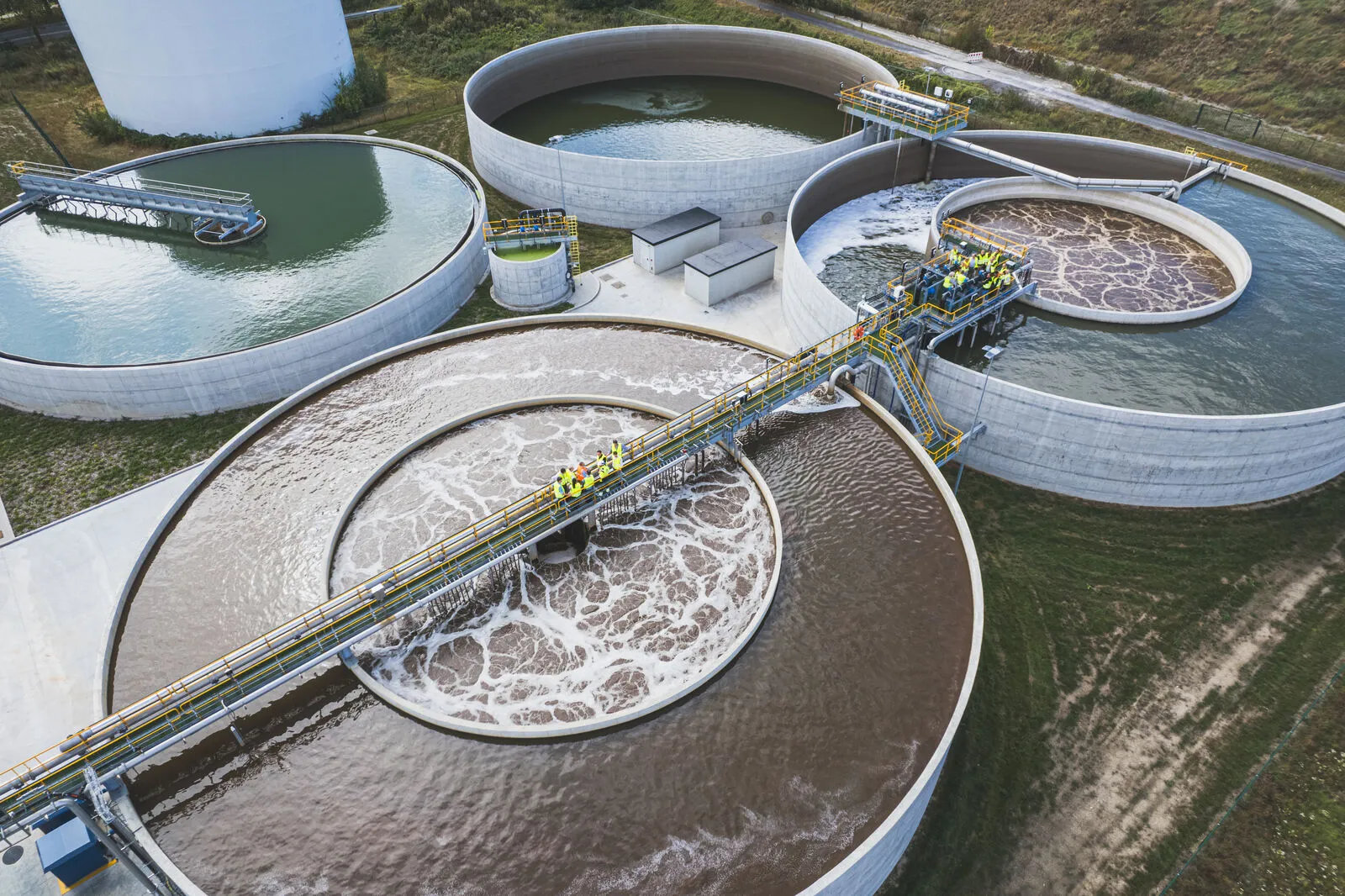
Yara Tertre makes fertilisers and nitrogen-based chemicals, and its wastewater is heavily loaded with nitrogen. Together with domestic wastewater, cooling tower blowdown, rainwater and effluents from other companies on the Villerot-Tertre eco-zoning, it now goes to one plant built by Trevi in 2025. Three buffer tanks even out the variable inflows, two parallel biological lines remove ammonium and nitrate using whichever carbon source is available and cheapest, sludge is mineralised and dewatered by centrifuge, and air from the sludge building goes through a two-stage lava and biofilter odour unit. The treated water is discharged into the Haine river within legal limits, and Trevi operates the plant.
Handling a production increase with source reduction instead of a bigger plant
A planned production increase at Ford's Craiova plant in Romania meant the existing wastewater plant could only process 40% of the projected volume, with heavy loads coming from the paint shop. Trevi analysed each effluent stream, ran lab trials and cost-benefit studies, and cut pollution at the source using Best Available Techniques, which reduced the need for a major extension. It then designed a scalable plant around the existing infrastructure: new buffer tanks for highly loaded water, fluoride dosing, a renovated clarifier, a new feed tank, secondary clarifier and energy-efficient aeration. The plant now handles the higher volumes, with lower CAPEX and OPEX than a full extension.
Growing production under a groundwater cap by reusing effluent
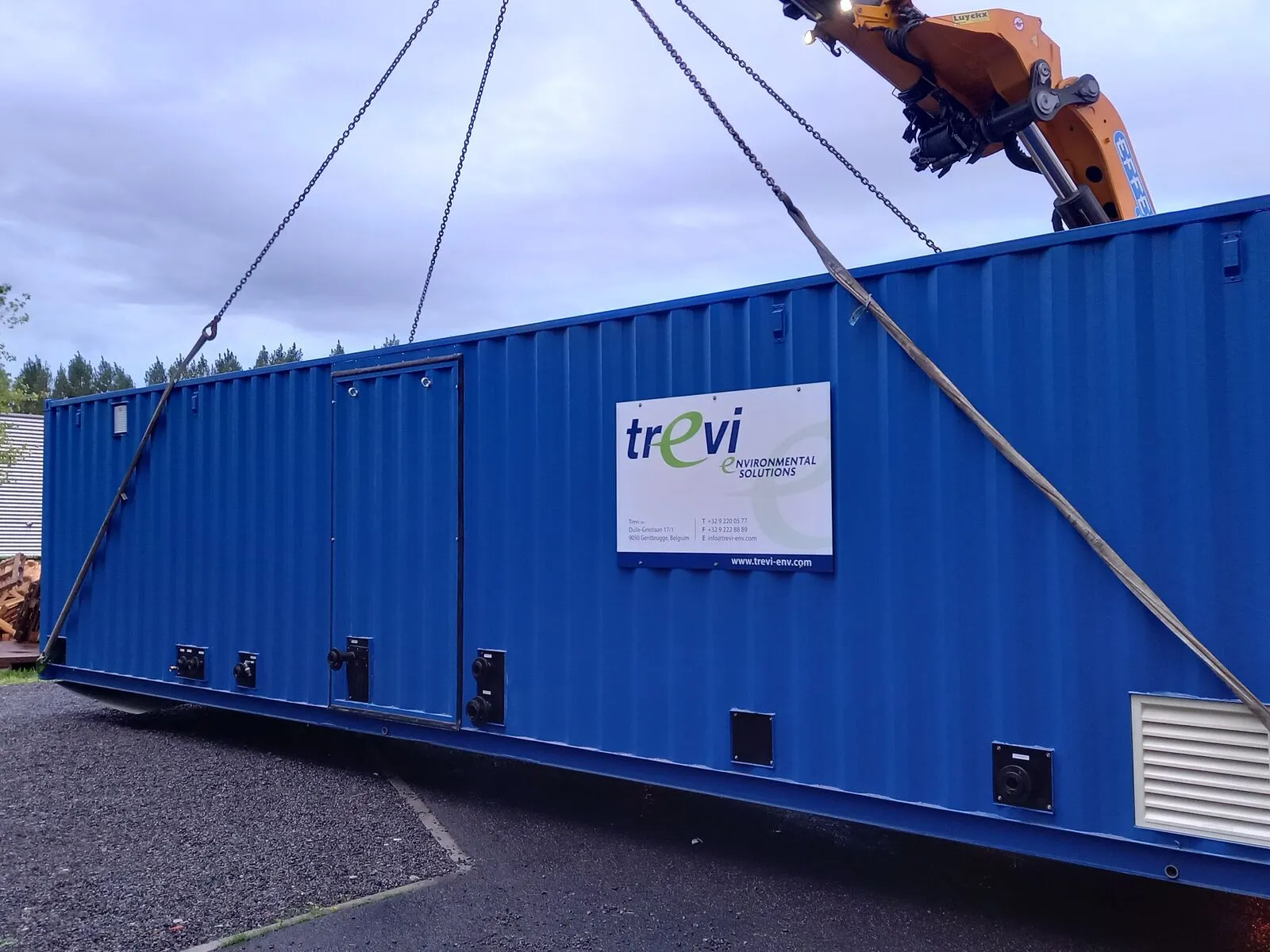
This Belgian poultry slaughterhouse wanted to raise production while its groundwater use was capped. Before investing, Trevi audited the wastewater, extrapolated the water and waste balance (including the concentration effect of reuse), screened the capacity of the existing treatment plant and assessed the impact on discharge limits and ecotoxicity. It then built a containerised ultrafiltration and reverse osmosis plant that treats the effluent of the biological plant. Treated effluent has become a water source for the site.
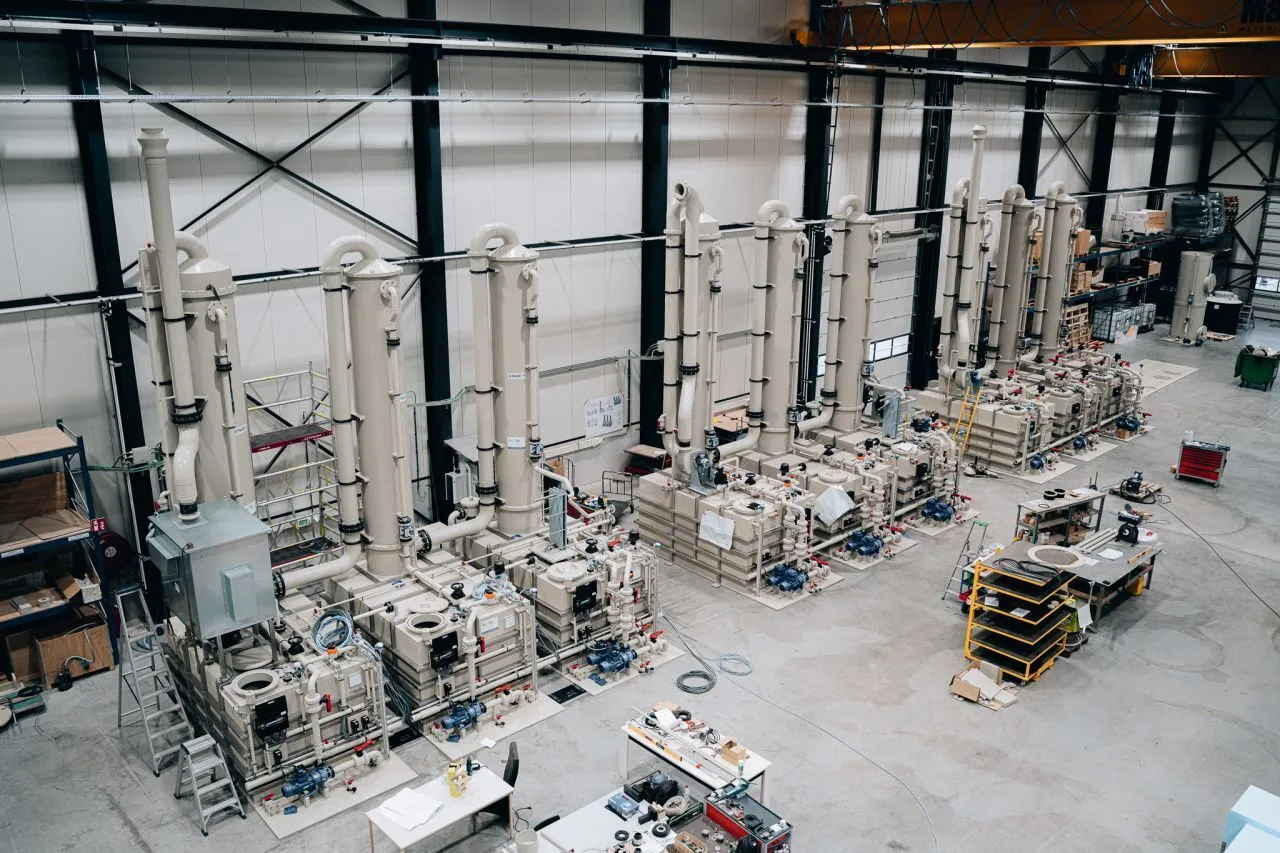
In 2018 Trevi installed a three-stage acid wet scrubber at Tomoe Asia in Chonburi, Thailand, to remove ethylene oxide (EtO) from sterilisation chamber exhaust. Its R&D team later developed a smart wet scrubber that needs no acid. After a pilot test, Trevi converted the first stage in 2023 by modifying the piping and adding an external reactor vessel, then stages 2 and 3 in 2024. The whole installation now runs on water as the only scrubbing liquid, with stable performance under full industrial conditions.
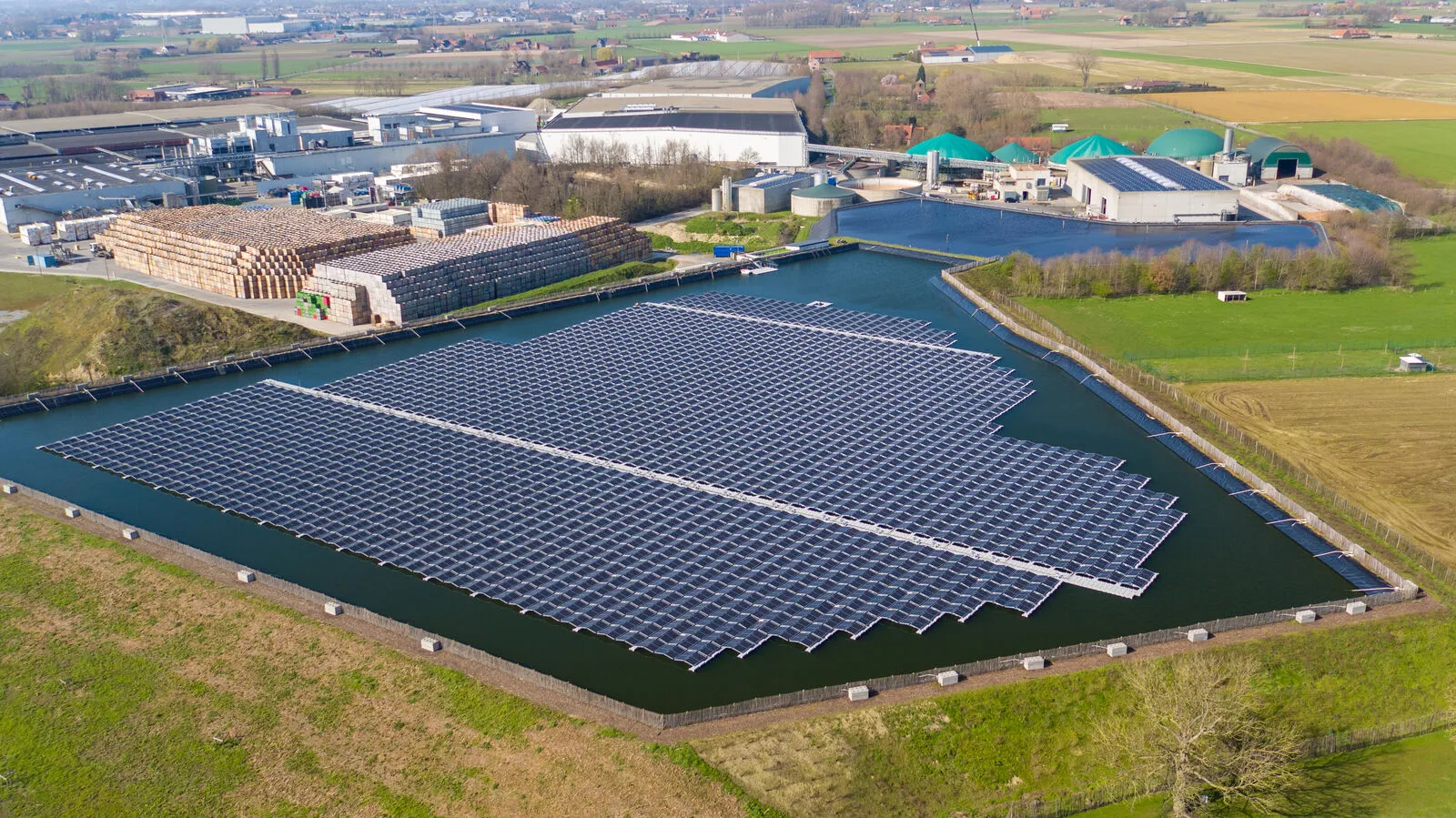
Frozen vegetable producer Ardo had a 2-hectare water storage basin at its site in Ardooie. Trevi installed 4,860 floating solar panels on it, close to 2 MW. The main difficulty was that the water level can drop by up to 9 metres, so Trevi designed a dedicated anchoring system that follows those fluctuations.
Turning imbalance costs into revenue with smart asset control
Mushroom compost producer Sterckx runs wind, solar, a battery and a genset on site. Poorly coordinated, such a mix creates imbalance costs and financial risk. Trevi brought all assets onto one control platform that balances production, storage and consumption and reacts to market prices and grid conditions. Imbalance exposure is now actively managed, and what used to be a cost has become a revenue opportunity through market participation.
Wind 2.5 MW, solar 4.4 MW, battery 2 MW / 4 MWh and a 2 MW genset under one control
One day, real numbers. Meet the companies turning carbon strategy into measurable savings — and benchmark yours against Belgium's sustainability leaders. Seats are limited.
Real ROI case studies — companies saving up to €94k/year
Benchmark your climate strategy against 100+ industry peers
Leave with an actionable, board-ready reduction roadmap