Nuoro is a Belgian engineering cooperative that helps industrial sites and water utilities reuse wastewater and rainwater, replace fossil heat with heat recovery and biomethane, and keep the installations running afterwards. It is independent and works as consultant, technology integrator or main contractor.
About Nuoro
Nuoro was founded by six partners as an independent engineering cooperative for circular water and energy projects. From its head office in Heist-op-den-Berg, a team of process, project and field engineers, water and energy experts and a legal expert covers the engineering, legal and contractual side of each project. Nuoro specialises in advanced wastewater treatment, water reuse and bio-energy, and works for industry, public water utilities and the energy sector: it delivered WPC Hofstade in Aalst for Waterunie, Europe's first Direct Potable Reuse plant based on municipal wastewater, and has built installations for Aquafin, Azulatis, VITO, Liefmans and Westmalle. Nuoro is VCA certified, and as a registered KMO-portefeuille provider, Flemish SMEs can get up to 30% support for its consulting and training.
They also worked with Nuoro
Aquafin
Waterunie
Farys
De Watergroep
VITO
Liefmans
What Nuoro has delivered
Waterunie (Farys & De Watergroep)Drinking water
Europe's first plant turning municipal wastewater into drinking water
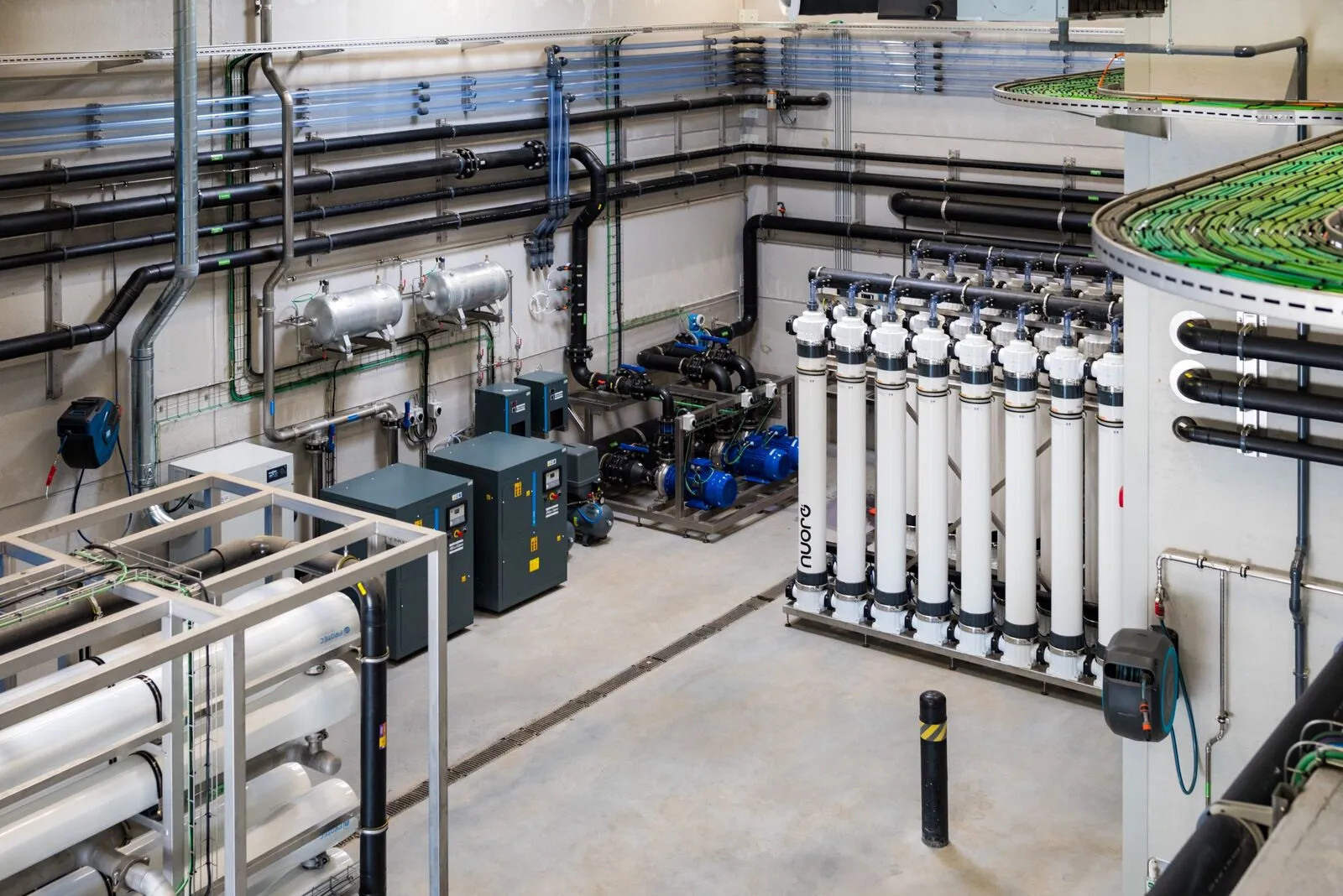
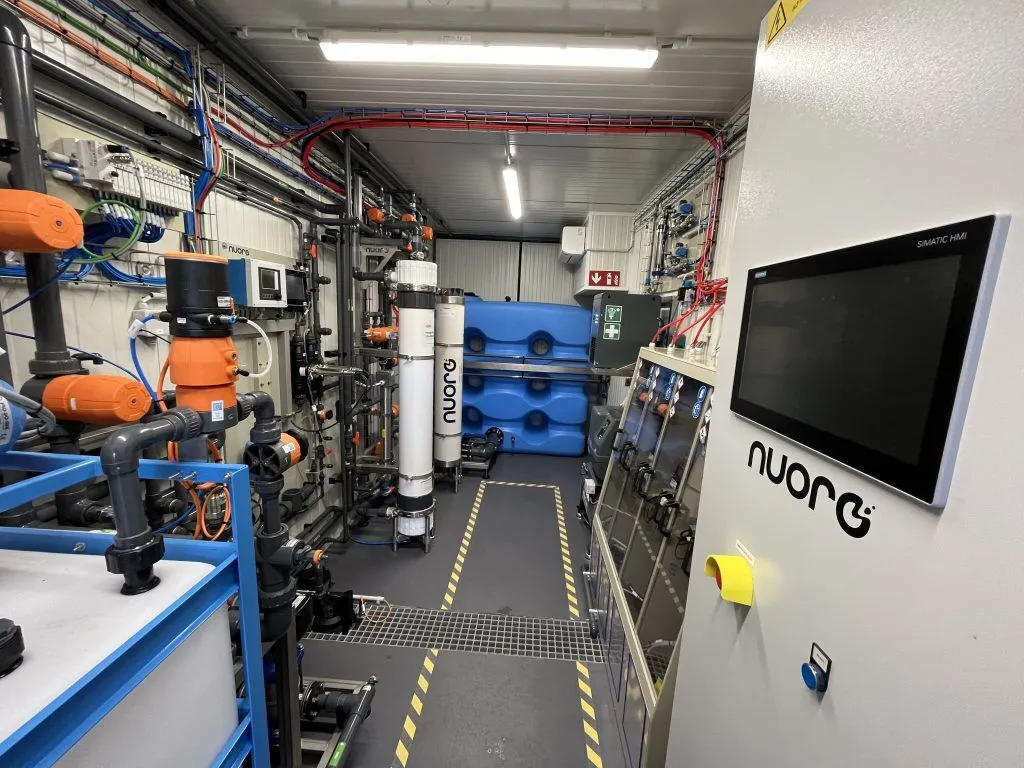
At WPC Hofstade in Aalst, treated effluent from Aquafin's wastewater plant used to flow to rivers and the sea. Nuoro designed and built the full water reuse plant for Waterunie: a multi-barrier train of ultrafiltration, reverse osmosis, activated carbon and UV disinfection, with monitoring that guarantees safe water before it enters the drinking water network. It went into service in June 2025, ahead of the dry summer, as Europe's first Direct Potable Reuse plant based on municipal wastewater. A pilot is testing aquifer storage to keep winter surplus underground for summer. Because the expansion was built into the design, a second line now doubles capacity with less than five days of production downtime for the mechanical works.
From biogas engines to green gas and heat from effluent
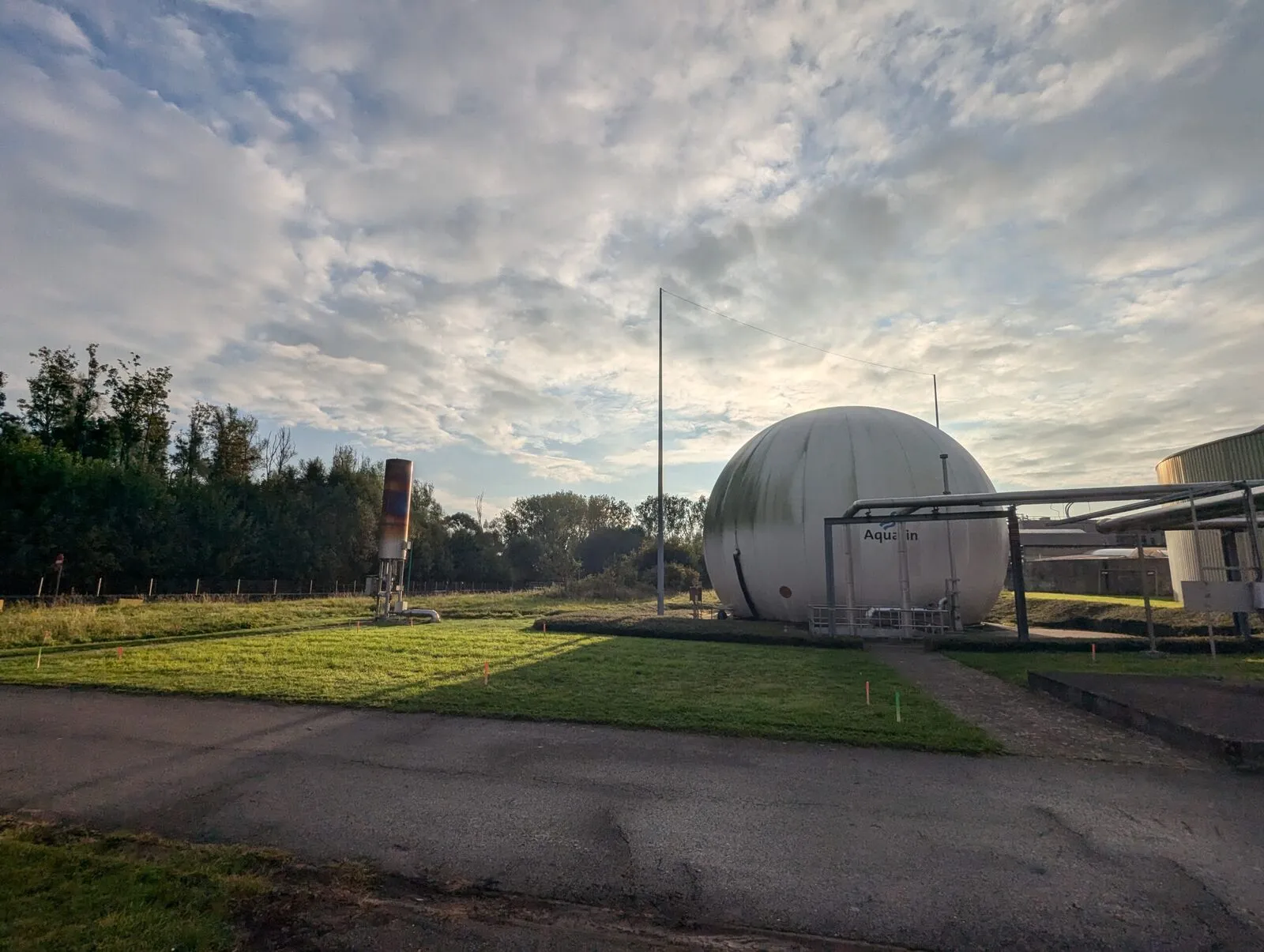
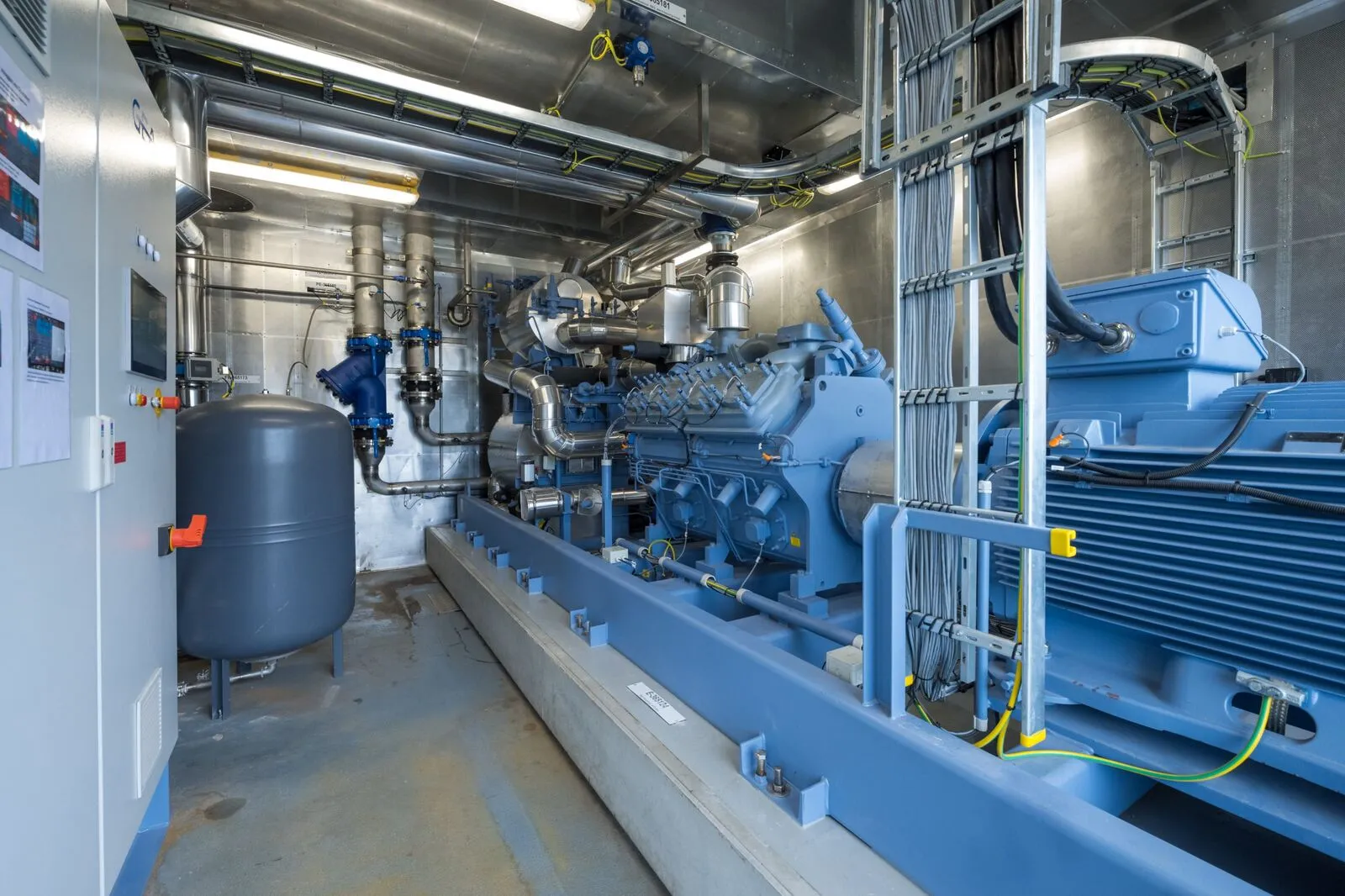
Aquafin's Ghent treatment plant, the second largest in Flanders, burned its sludge biogas in CHP units that were reaching end of life, at a time when nitrogen emissions were creating permitting problems on other sites. Nuoro won the tender and integrated a biogas upgrading unit, with French specialist Prodeval, so the gas now reaches natural gas quality and is injected into the Fluvius grid. Without CHP heat, the digesters needed a new heat source: Nuoro built a heat exchanger and heat pump that recover heat from the treated effluent, the first time this is done at this scale in a sludge digestion process. The installation has been running since June 2025.
Turning a food plant's treated wastewater into drinking-quality process water
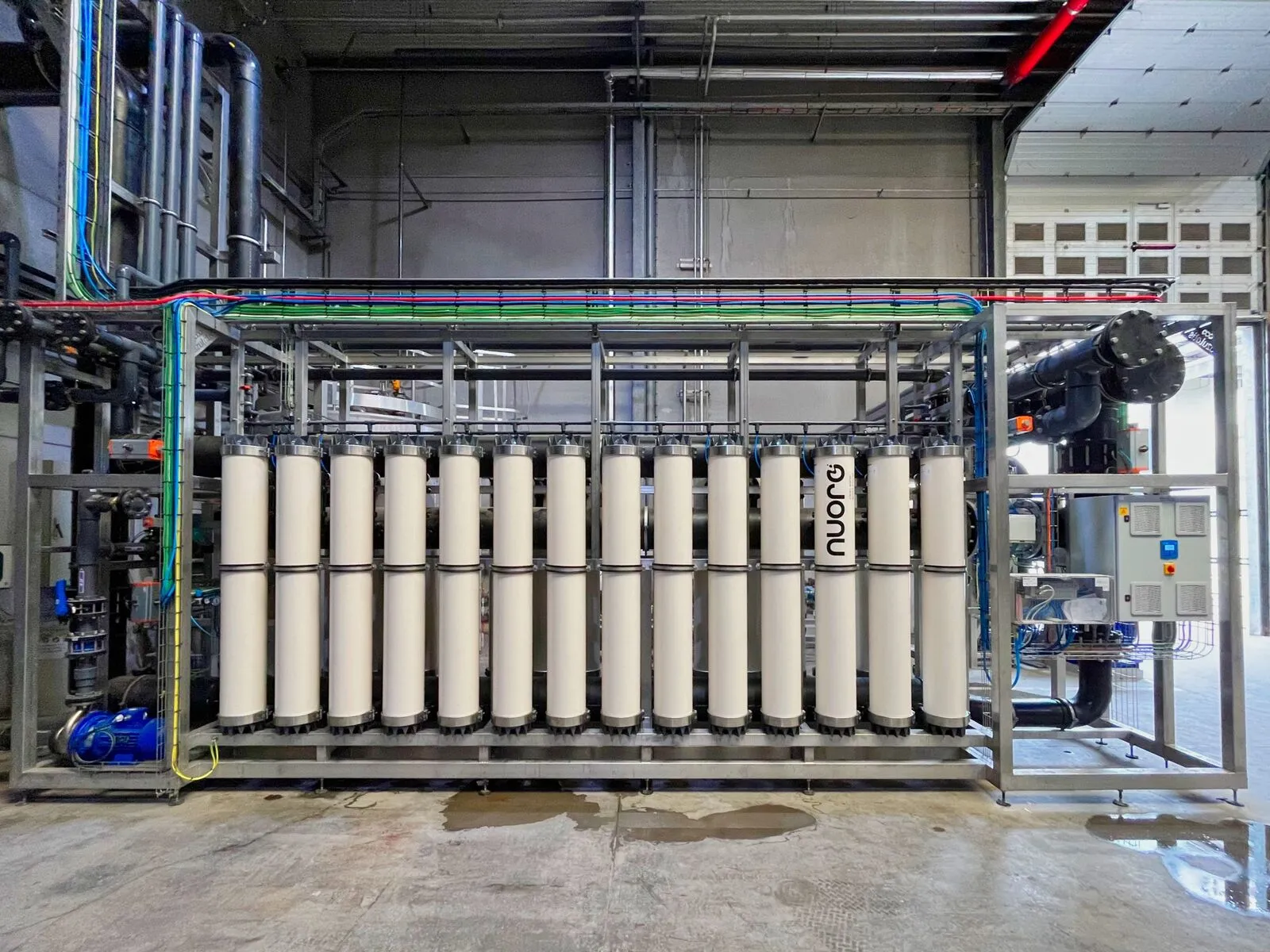
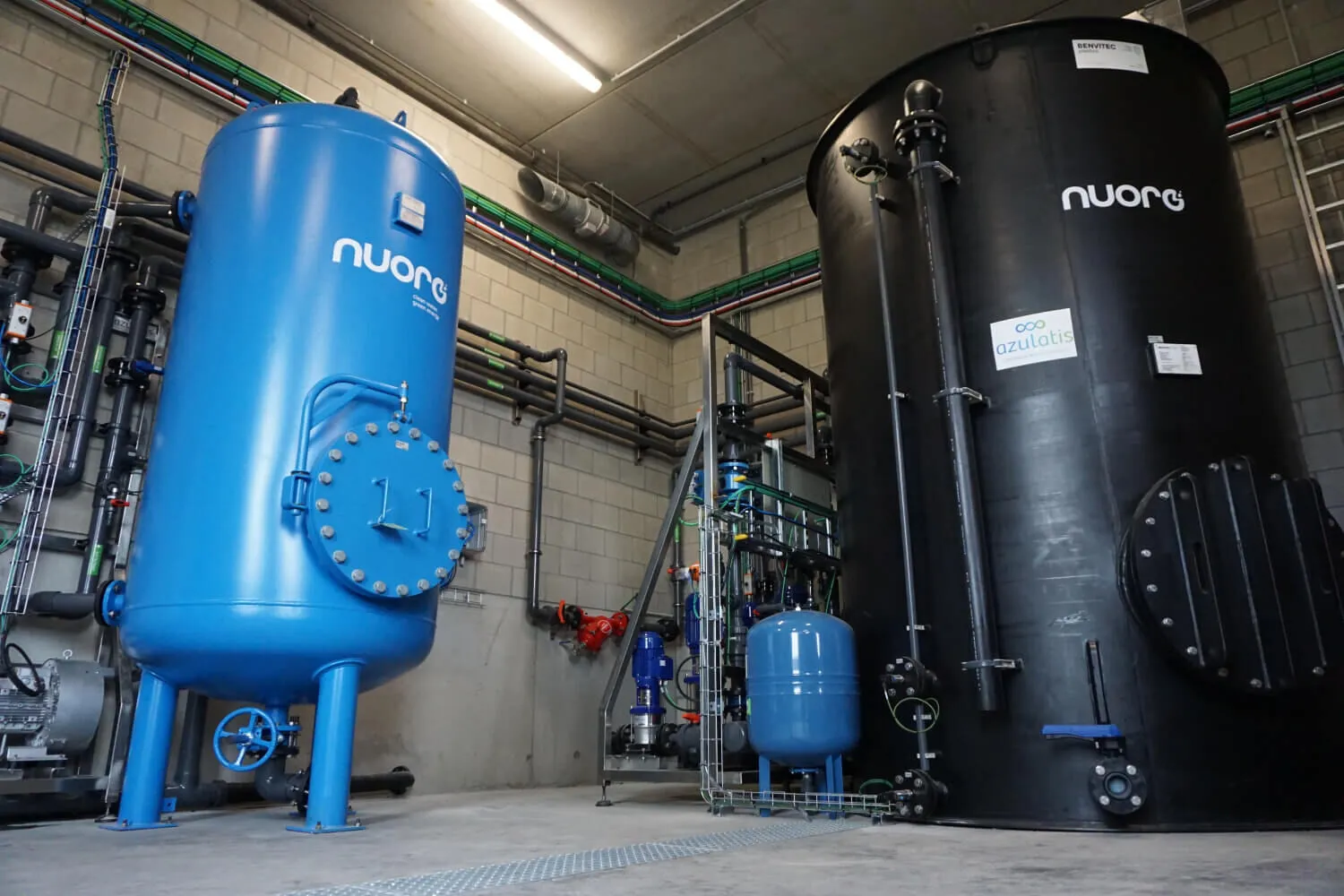
For Azulatis, the industrial water subsidiary of De Watergroep, Nuoro designed and built a reuse installation for a food processing company, so it can cut its water use and stay supplied through drier Flemish summers. Bio-effluent goes through ultrafiltration with 28 membrane modules, UV disinfection and two reverse osmosis units, which bring it to drinking water quality for use in the plant. The installation had to fit inside an existing building, so the team first made a full 3D model of it. Nuoro also supplied the storage tanks and chemical dosing cabinets, and the plant can be extended to reduce the water footprint further.
A reliable water supply for a growing brewery, without salt discharge
Demand for Liefmans' fruit beers kept growing in Oudenaarde, but its yearly groundwater allowance is limited, some minerals in the groundwater exceed drinking water standards and the available city water is extremely hard. Nuoro designed and built a reverse osmosis plant with food-grade components that can treat both groundwater and city water. It replaces ion exchange softening and its salt discharge, uses a high-recovery design and CO₂ dosing instead of traditional acids, and adds redundant disinfection steps for microbiological safety.
Total water losses of about 10%, even with very hard city water
No more salt discharge from ion exchange regeneration
Drinking water quality that consistently meets microbiological standards
Brewing and process water with minimal water loss for a Trappist brewery
As part of its renovation, the Trappist brewery of Westmalle wanted to produce its brewing and process water with minimal water loss and low energy use, without any compromise on quality. Nuoro compared technologies, then piloted ceramic ultrafiltration directly on the brewery's groundwater before designing the full-scale plant. Ceramic ultrafiltration after two-stage oxidation replaces the two-stage sand filters and polymeric UF, and closed-circuit reverse osmosis replaces the ion exchange softener for process water. Commissioning was planned for August and September 2026, with final delivery in October 2026.
Far lower water losses in brewing water treatment
No salt discharge from softener regeneration
Technology validated in a pilot on the brewery's own groundwater
Keiberg Vossem (Tervuren & Interleuven)Business park
Shared rainwater reuse for the companies of a business park
At the Keiberg Vossem business park in Tervuren, a drought pilot backed by the Flemish Blue Deal, rainwater from the whole site is collected in a basin. With Azulatis and De Watergroep, Nuoro built the treatment installation next to it: ultrafiltration removes microorganisms, and activated carbon removes dissolved organic substances such as PFAS, as well as colour and odour. The treated water returns to the companies through a second supply network. When there is more water than they need, it is stored underground through aquifer storage and recovery instead of overflowing into the sewer.
Rainwater reused by several companies through one collective system
PFAS and other micropollutants removed before reuse
Surplus stored underground for dry periods instead of lost to the sewer
“Nuoro knows how to produce great water. Westmalle knows how to turn it into even better beer.”
Lieven Van Hofstraeten,Production Director, Westmalle
“Nuoro dacht vanaf het begin mee over het ontwerp en bracht de juiste expertise aan tafel. Dankzij hun technische knowhow, sterke projectopvolging en vlotte samenwerking met andere partners leverden we het project ruim op tijd op – net voor de droge zomer van 2025.”
Bart De Gusseme,Senior Expert Innovation, Waterunie
“Nuoro helped us build an incredible water reuse plant, in a very short period.”
One day, real numbers. Meet the companies turning carbon strategy into measurable savings — and benchmark yours against Belgium's sustainability leaders. Seats are limited.
Real ROI case studies — companies saving up to €94k/year
Benchmark your climate strategy against 100+ industry peers
Leave with an actionable, board-ready reduction roadmap