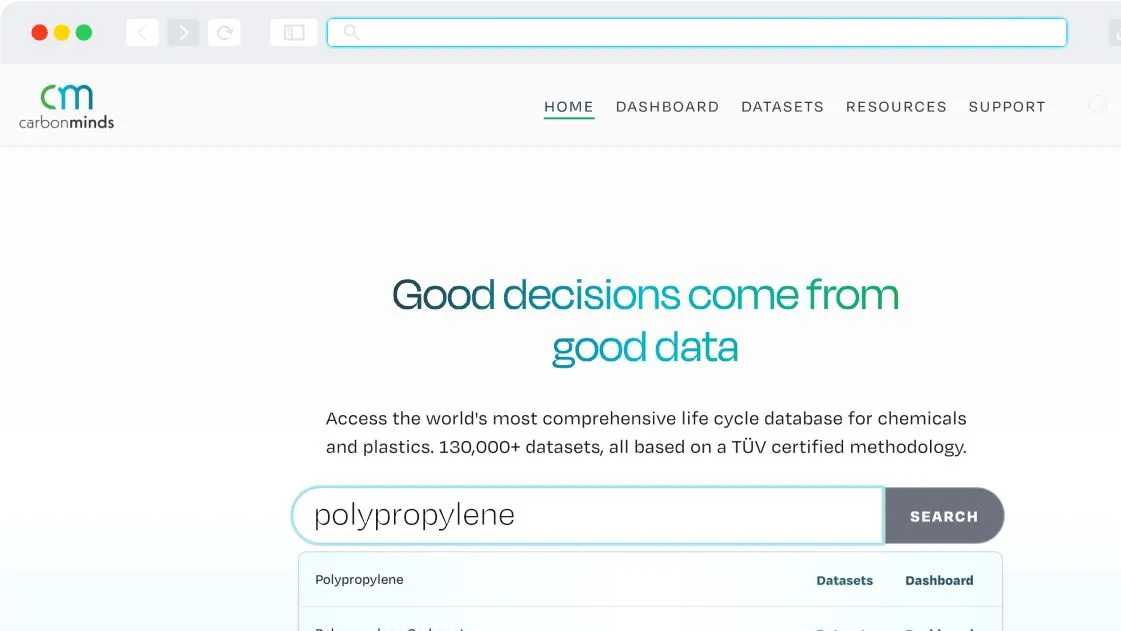
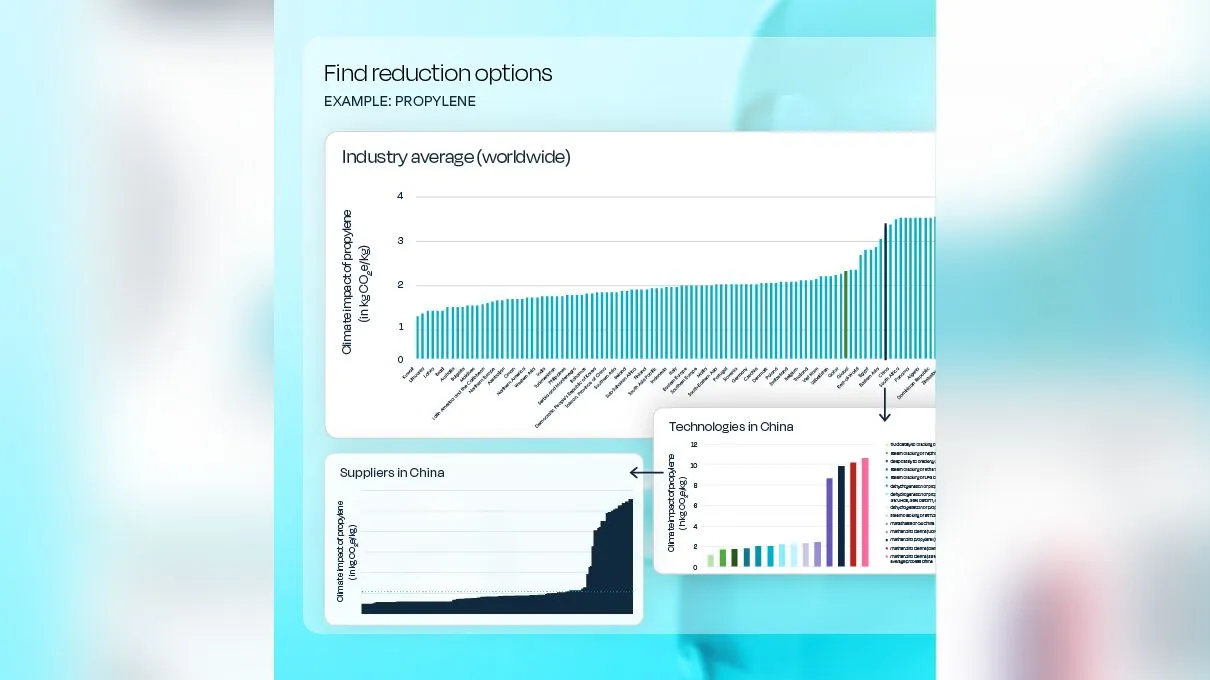
Carbon Minds is a German provider of life cycle data for chemicals and plastics. Its cm.chemicals database gives companies that buy these materials carbon footprints by substance, region and production route, so they can calculate Scope 3.1 accurately and choose lower-carbon materials.
About Carbon Minds
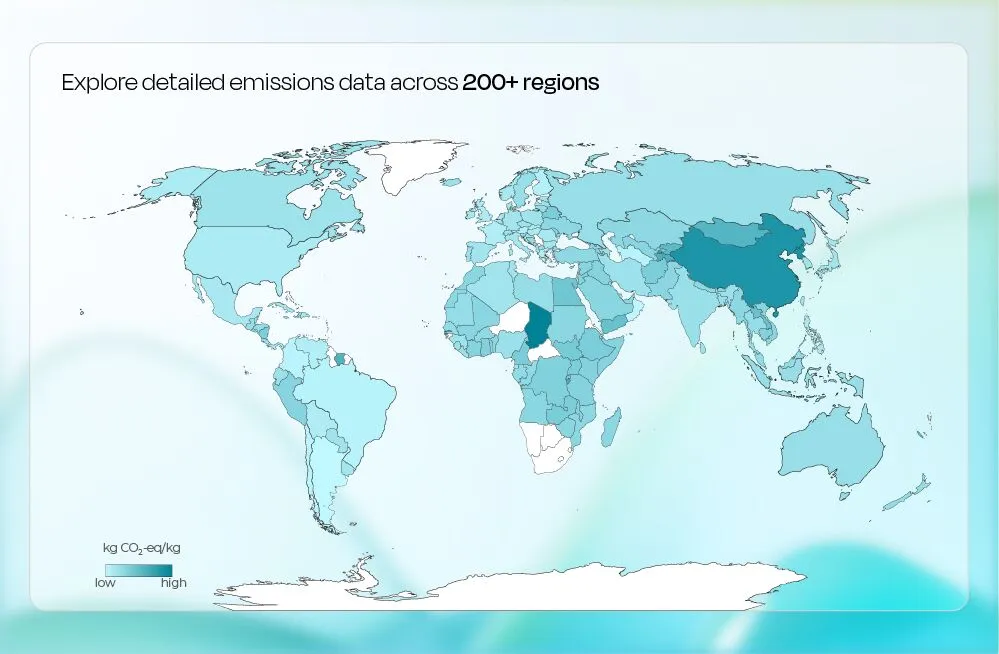
Carbon Minds GmbH is a Cologne-based company, founded in 2019, that produces environmental life cycle data for chemical value chains. It was co-founded by Dr. Arne Kätelhön, now Managing Director alongside Dr. Marvin Bachmann, and Dr. Raoul Meys Oliveira, with Prof. André Bardow and Prof. Sangwon Suh as co-founders and scientific advisors. Its team of engineers, chemists, data scientists and sustainability experts builds cm.chemicals, which covers more than 1,700 chemicals and plastics in 135,000+ datasets across 200+ regions, updated to reference year 2024. The methodology is TÜV-certified for ISO 14040, 14044 and 14067, the Together for Sustainability (TfS) PCF Guideline, UEIL/ATIEL, WBCSD and the GHG Protocol Product Standard, and TfS endorsed Carbon Minds as the first secondary-data provider fully aligned with its guidelines. The data is available in the Carbon Minds Data Portal and in partner tools such as SimaPro, openLCA, One Click LCA, Makersite and Climatiq. Carbon Minds also runs PCF and LCA studies, methodology certification, net-zero pathway studies and training, including a five-day certificate course at RWTH Aachen University. Clients include Bayer, Henkel, LANXESS, Covestro, Evonik and Brenntag.
They also worked with Carbon Minds
Bayer
Henkel
LANXESS
Covestro
Evonik
Brenntag
Avient
LyondellBasell
What Carbon Minds has delivered
BayerLife sciences
Feeding supplier decarbonisation with product-level data
Bayer aims for net zero across its value chain by 2050 at the latest, with significant reductions in line with Science-Based Targets criteria by 2030. Its supplier decarbonisation team found that supply chain data was hard to get, and that coverage, quality and consistency were all problems, while good data is needed for assessments, supplier discussions and tracking reductions. After screening the market, Bayer worked with Carbon Minds to map the goods it purchases to the Carbon Minds PCF library. The PCFs now feed Bayer's new central GHG Data Model, the backbone of its GHG accounting and reporting, and are also used in its own PCF calculations. The licence keeps the data up to date as sector data quality improves.
Purchased goods mapped to the Carbon Minds PCF library
PCFs integrated into Bayer's central GHG Data Model
Automated PCFs for more than 60,000 adhesive products
Henkel buys a very broad range of raw materials, and its value chains differ strongly between regions because of feedstock availability and market demand. Its industrial customers want to know the emissions of what they buy, but reliable data on raw materials was scarce. Henkel adopted the cm.chemicals database, whose regional and technology-specific modelling reflects these complex value chains. The team gained visibility on supply chain emissions across chemicals, regions and technologies, identified key reduction levers, and now calculates PCFs automatically for more than 60,000 Henkel Adhesives products to share with customers.
Supply chain emissions visible by chemical, region and technology
Closing raw material data gaps that suppliers could not fill
LANXESS uses PCF data to find emission hotspots in its products and to report credibly to customers, stakeholders and regulators. Ideally that data comes from suppliers, but not all of them could provide it, which left gaps across the raw material portfolio. LANXESS matched Carbon Minds data with its own raw material information, covering a significant share of its materials and reducing the need for approximations, and took part in an in-house Carbon Minds training to build LCA and PCF expertise. The wide range of datasets and regional coverage improved the coverage and accuracy of its carbon footprint data, which now supports its annual reports, ESG disclosures and customer communication.
Better carbon footprint coverage across the raw material portfolio
Fewer approximations in PCF calculations
In-house LCA and PCF expertise built through training
ISO 14067 cradle-to-gate footprints built on trusted raw material data
Avient wanted to publish specific carbon footprint values for its products, to steer product development towards lower-carbon solutions, find emission hotspots and give customers transparent information. The obstacle was a lack of trusted carbon footprint data for major polymers and chemical compounds: suppliers often could not provide accurate figures because of complex processes, and values had to reflect different technologies and production regions. Avient identified the raw materials without footprint data and filled the gaps with third-party-verified Carbon Minds data, combined with its own data in a cradle-to-gate calculation method compliant with ISO 14067:2018.
Cradle-to-gate calculation method compliant with ISO 14067:2018
Raw material data gaps filled with third-party-verified data
Product footprints shared with customers and the public
A pilot that sets up PCFs for a whole European portfolio
Master Fluid Solutions, maker of the TRIM and WEDOLiT metalworking fluids, aims to assess its entire European product portfolio cradle-to-gate by the end of 2026. Supplier data was often missing, incomplete or not validated, matching additives added complexity, and the team lacked the capacity to calculate PCFs at scale. With Carbon Minds, it applied a methodology aligned with ISO 14067:2018 and the UEIL/ATIEL PCF guidelines for lubricants, then ran a pilot on six products, closing data gaps by combining primary data with Carbon Minds secondary data and Scope 3.1 emission factor mapping. A workshop trained sales, procurement, management, operations and IT. The company can now answer customer PCF requests, and the next phase semi-automates calculations across the portfolio.
Methodology aligned with ISO 14067:2018 and UEIL/ATIEL guidelines
Customer PCF requests answered on demand
Clear path to the full European portfolio by end 2026 (target)
A certified PCF methodology for a global chemical distributor
More and more Brenntag customers and partners were asking for transparent, comparable information on the climate impact of the products they buy. Brenntag needed a robust methodology compliant with ISO 14067:2018 and the TfS PCF Guideline, but its LCA practice was still developing and it had no experience with TÜV's new certification process. Carbon Minds helped write the methodology document, ran an in-house LCA training, supplied life cycle data and guided the TÜV certification. Brenntag has provided PCFs through its CO2Xplorer tool since 2022, and TÜV Rheinland Energy GmbH has certified its methodology, making it, by its own account, the first global chemical distribution company to do so for a semi-automated PCF tool.
Methodology certified by TÜV Rheinland (ISO 14067:2018 and TfS)
PCFs provided to customers through CO2Xplorer since 2022
In-house LCA know-how built quickly through training
“By combining Carbon Minds data with our own material information and building internal LCA expertise, we achieved accurate, consistent carbon footprint data across our product portfolio.”
Anna Schröder,Head of Global Product Stewardship, LANXESS
“Working with CarbonMinds data allows us to increase the accuracy of our PCF calculations and enhance credibility and transparency in our PCF reporting and communication.”
One day, real numbers. Meet the companies turning carbon strategy into measurable savings — and benchmark yours against Belgium's sustainability leaders. Seats are limited.
Real ROI case studies — companies saving up to €94k/year
Benchmark your climate strategy against 100+ industry peers
Leave with an actionable, board-ready reduction roadmap