Holcim Belgium produces cement and concrete in Belgium and sells a low-carbon range: ECOPact concrete, with at least 30% less CO₂ per m³ than standard CEM I concrete of the same strength class, and ECOPlanet cements made with blast-furnace slag and fly ash.
About Holcim Belgium
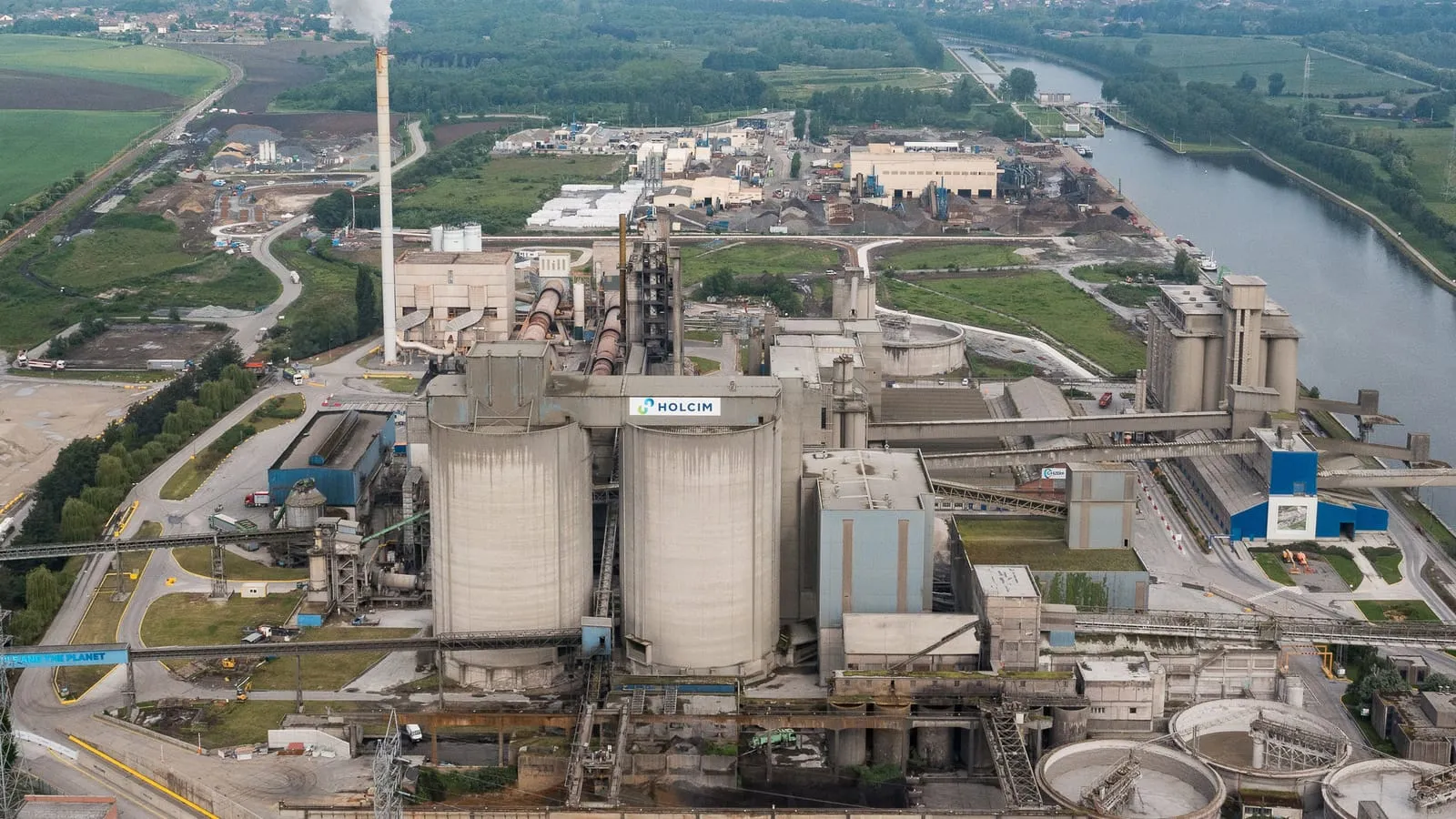
Holcim Belgium is part of the Holcim group, which has more than 50,000 employees in 45 countries. In Belgium it employs 887 people across 28 sites and supplies cement, ready-mix concrete, mortar and aggregates for residential and non-residential buildings, civil engineering works and roads. Its cement is made at the Obourg plant, where Geocycle, the group's waste recovery business, prepares alternative fuels at its Seneffe site.
At Obourg, the GO4ZERO project is preparing net-zero clinker production. The first phase, planned for 2027, replaces the current kiln with a new-generation oxyfuel kiln that cuts CO₂ by close to 30% per tonne of clinker. The second phase, planned for 2029, adds carbon capture with Air Liquide's Cryocap™ Oxy technology: 1.1 million tonnes of CO₂ a year will be captured, then shipped for storage under the North Sea. The investment follows the group's SBTi-validated trajectory to net-zero scope 1 and 2 emissions by 2050.
They also worked with Holcim Belgium
Elia Group
Jan De Nul
DEME
What Holcim Belgium has delivered
Elia Group, TM Edison, De Rycke BetonEnergy infrastructure
Seawater-resistant caissons for the Princess Elisabeth Island
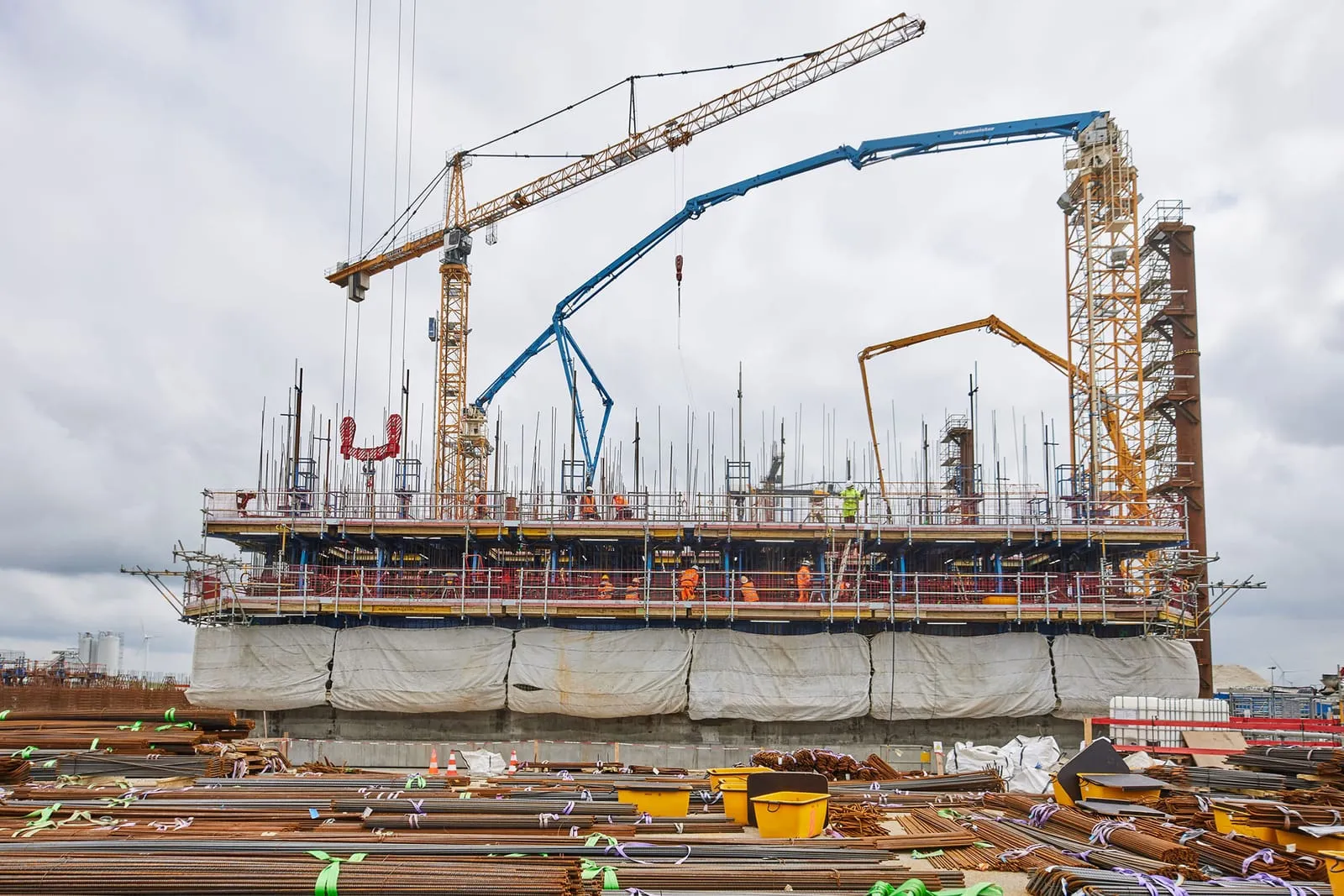
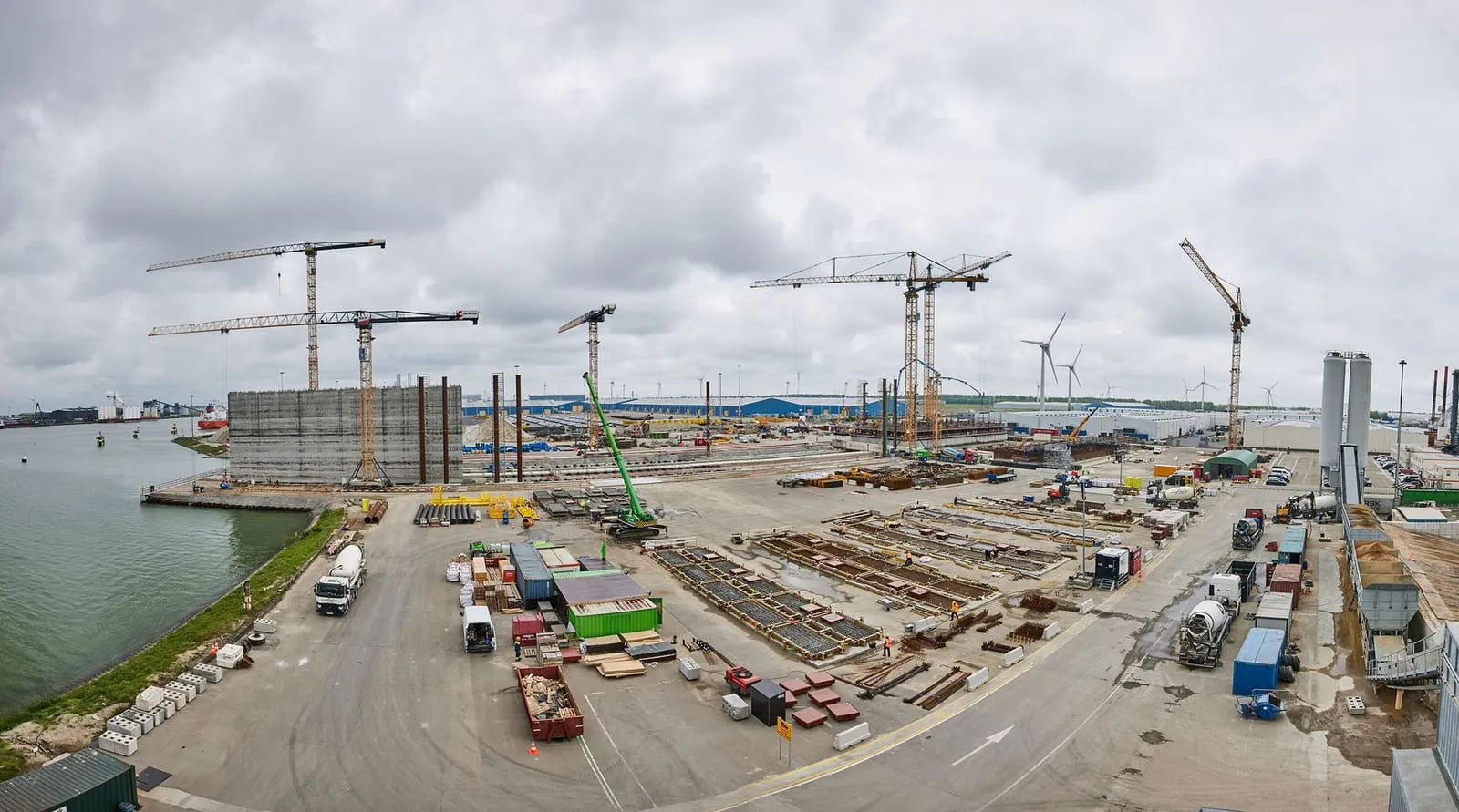
Elia Group is building the Princess Elisabeth Island, a future energy island in the North Sea, with the TM Edison consortium (Jan De Nul and DEME) and De Rycke Beton. The caissons that form the island had to resist seawater. They were built with ECOPlanet 5A4 HSR, a seawater-resistant low-carbon cement from Holcim Belgium (April 2024).
Island caissons built with low-carbon ECOPlanet cement
Seawater-resistant cement (HSR) for a marine structure
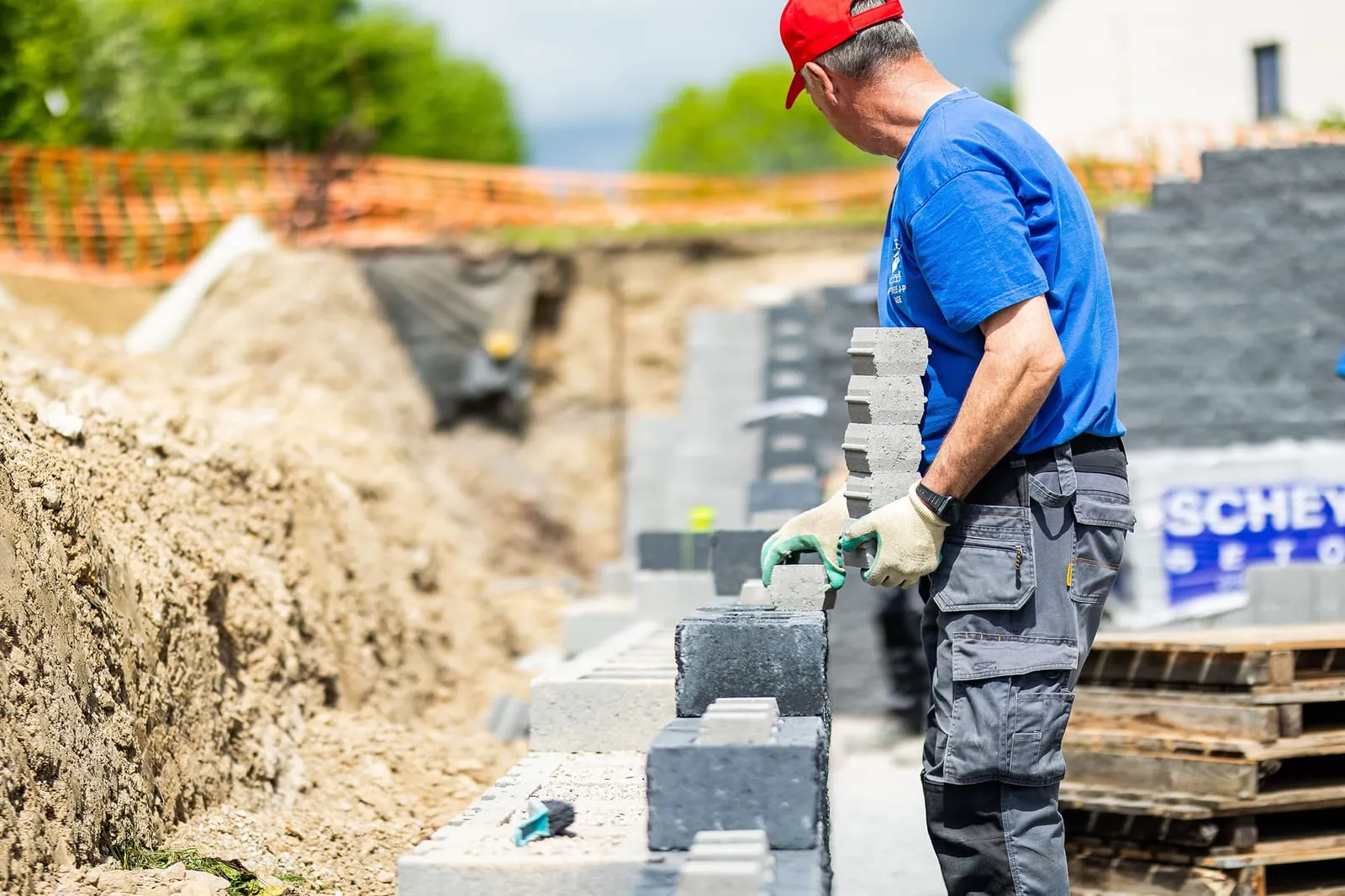
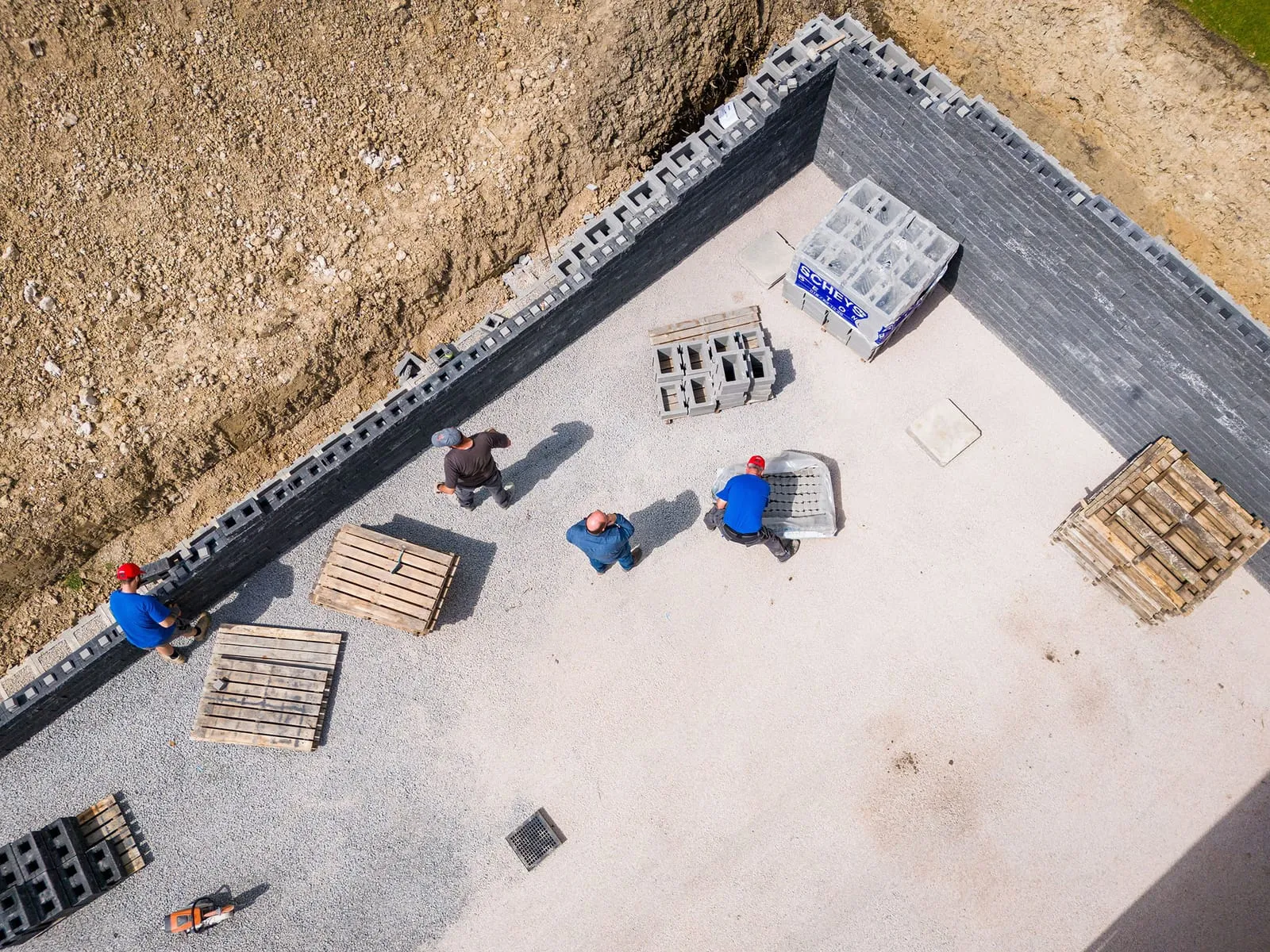
Precast manufacturer Scheys Beton produced Stackton retaining walls for a site in Welkenraedt with ECOPlanet cement (May 2024). The lower-carbon cement reaches the site inside a standard precast product, so the builder does not change how the walls are specified or laid.
Precast retaining walls made with ECOPlanet cement
Lower-carbon cement used by a precaster in its own product
ECOPact concrete for the Living Tomorrow innovation campus
Living Tomorrow's new innovation campus in Vilvoorde was built with ECOPact concrete, with at least 30% less CO₂ per m³ than standard CEM I concrete of the same strength class. The concrete had to meet four requirements: raw materials with a low environmental footprint, production plants with the CSC (Concrete Sustainability Council) label, transport in Euro 6 vehicles, and a carbon assessment at the end of each project, validated by an external body.
At least 30% less CO₂ per m³ than standard CEM I concrete
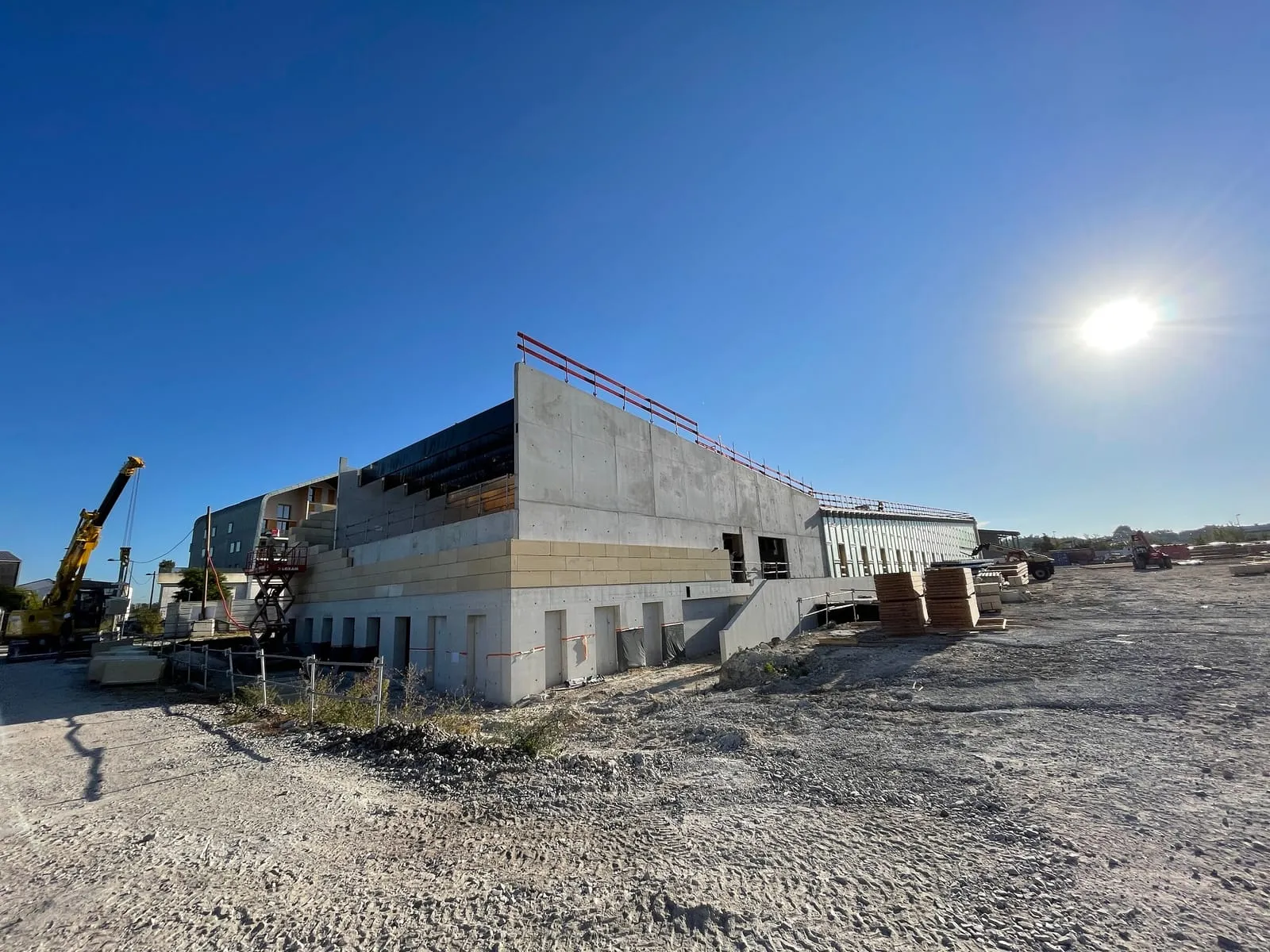
For the 2,200 m² media library of Herblay-sur-Seine, contractor S.N.R.B. and architects Atelier WOA and Atelier Angel Architecte wanted to cut emissions as far as possible while keeping the best quality. Lafarge France, part of the Holcim group, supplied 1,200 m³ of ECOPact, with Agilia Architectural 360 self-compacting concrete for the envelope. The concrete emitted 50% less CO₂ than a standard mix, saving 130 tonnes of CO₂, and the building complies with the French RE2020 environmental regulation.
“Bouwen met een visie op de toekomst betekent vooruitdenken om onze impact op het milieu te verminderen. Daarom werken we graag samen met Holcim, omdat zij altijd nadenken over innovatieve oplossingen. Wij waarderen de samenwerking omdat wij weten dat Holcim blijft investeren in onderzoek en ontwikkeling om ook haar ecologische voetafdruk verder te verkleinen.”
Frank Beliën,Founder and chairman, Living Tomorrow
One day, real numbers. Meet the companies turning carbon strategy into measurable savings — and benchmark yours against Belgium's sustainability leaders. Seats are limited.
Real ROI case studies — companies saving up to €94k/year
Benchmark your climate strategy against 100+ industry peers
Leave with an actionable, board-ready reduction roadmap