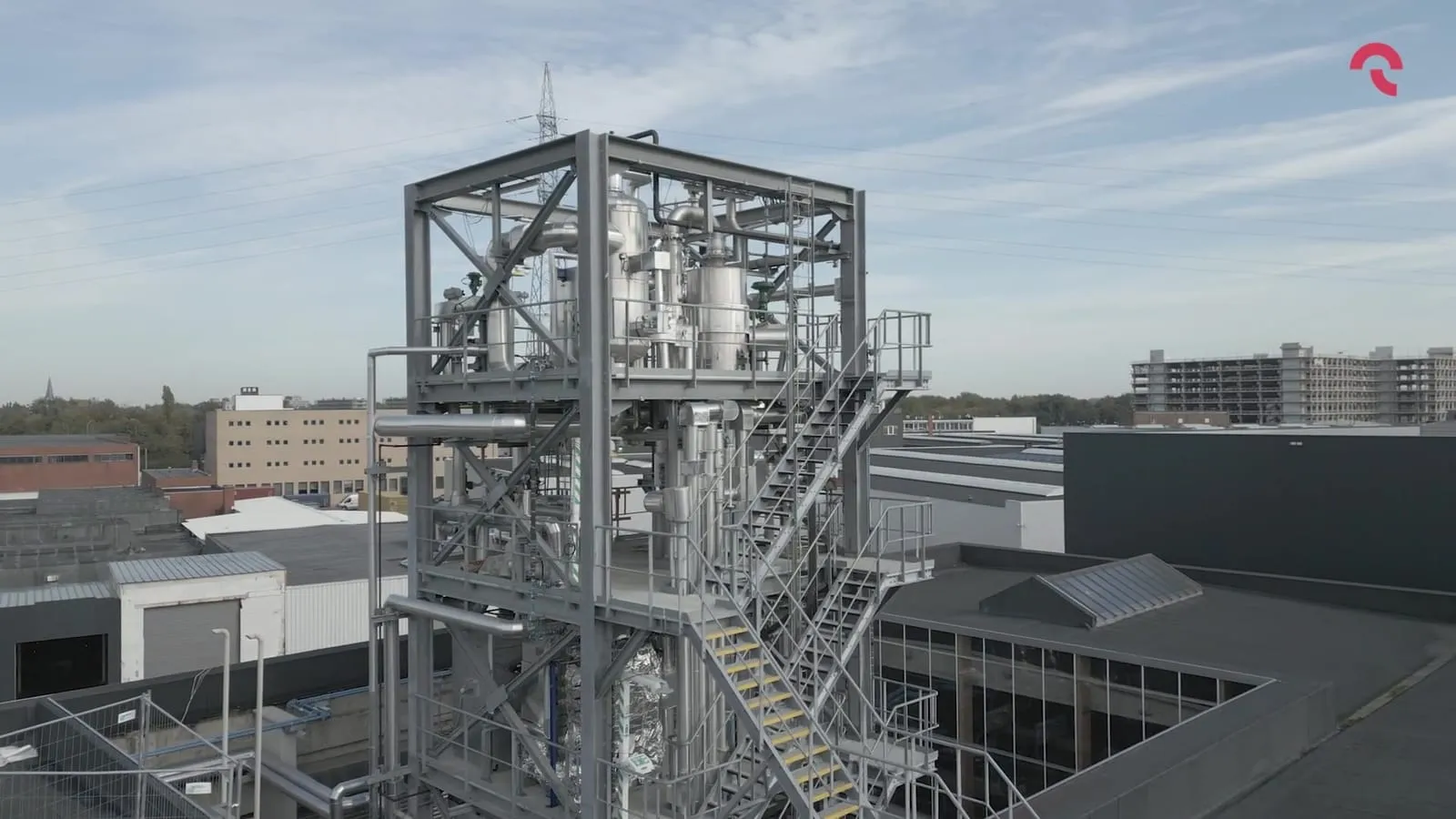
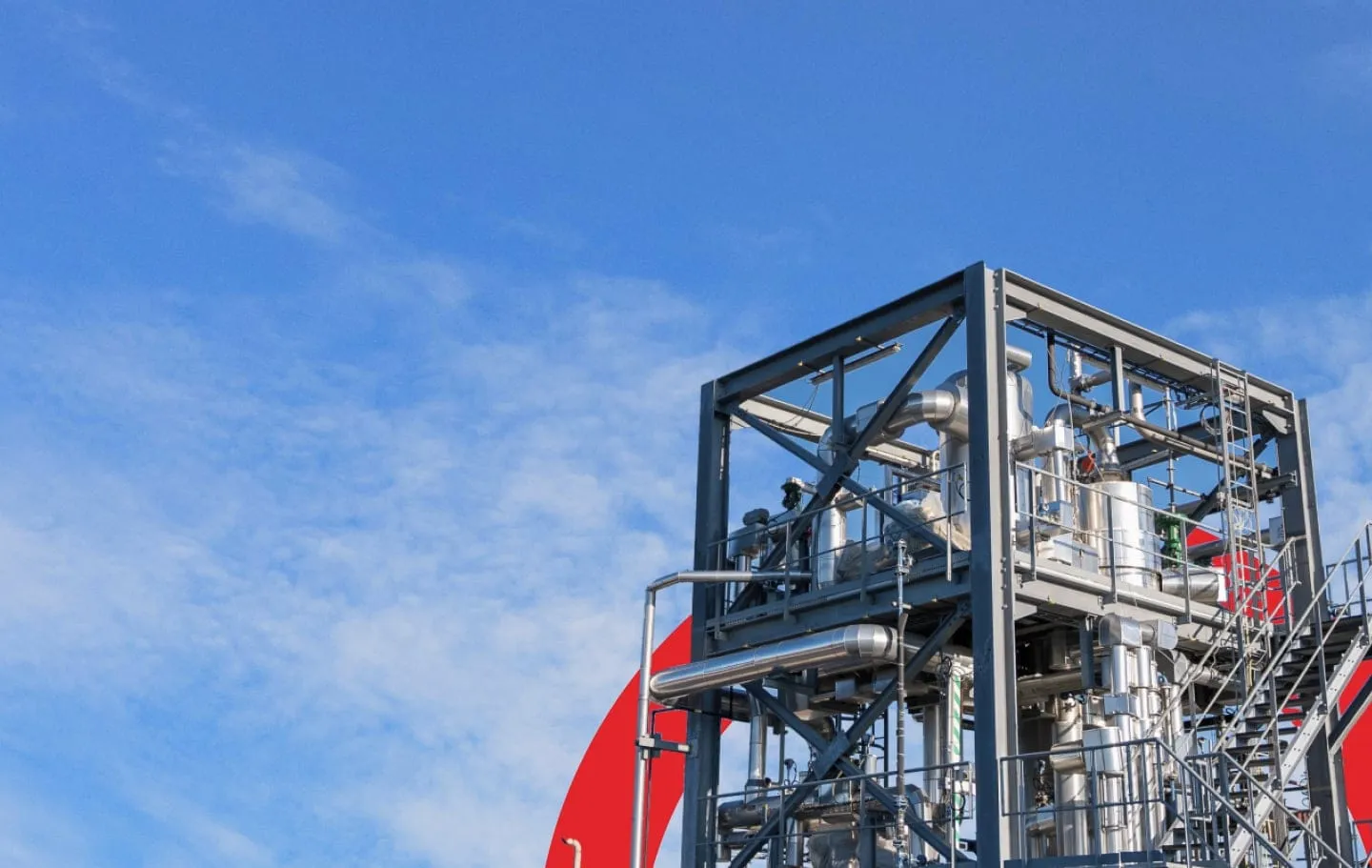
Qpinch, based in Antwerp, builds the Qpinch Heat Transformer: a chemical heat pump that captures industrial waste heat from 80°C and turns it into process steam at up to 210°C, using about 40 kW of electricity per MW of steam.
About Qpinch
Qpinch was founded in Antwerp in 2012 by Wouter Ducheyne, now CTO, and Christian Heeren, now CCO. Since 2023 it has been led by CEO Valerie Dejaeghere, who joined after more than 20 years at ExxonMobil. Its heat transformer, inspired by the ATP-ADP reaction that carries energy in living cells, has reached Technology Readiness Level 9, with commercial units in the chemical industry at Borealis, Kuraray and SABIC. Qpinch also runs a 1 MW lighthouse plant in the Port of Antwerp and took part in PUSH2HEAT, a Horizon Europe project on upgrading industrial heat.
In 2024 Qpinch raised €6 million in additional funding; its investors include Capricorn Partners, Quest for Growth, SFPIM, SABIC Ventures, Oak3Capital and Port of Antwerp-Bruges. Since April 2025 it has worked with Honeywell UOP to bring the Qpinch Heat Transformer to industrial markets worldwide. Its team of process, mechanical and automation engineers starts each project with a feasibility study of the site's energy balance, to find which waste heat streams can be turned into steam.
They also worked with Qpinch
Borealis
Kuraray
SABIC
What Qpinch has delivered
BorealisChemicals
Reactor waste heat turned into steam at the Borealis LDPE plant in Zwijndrecht
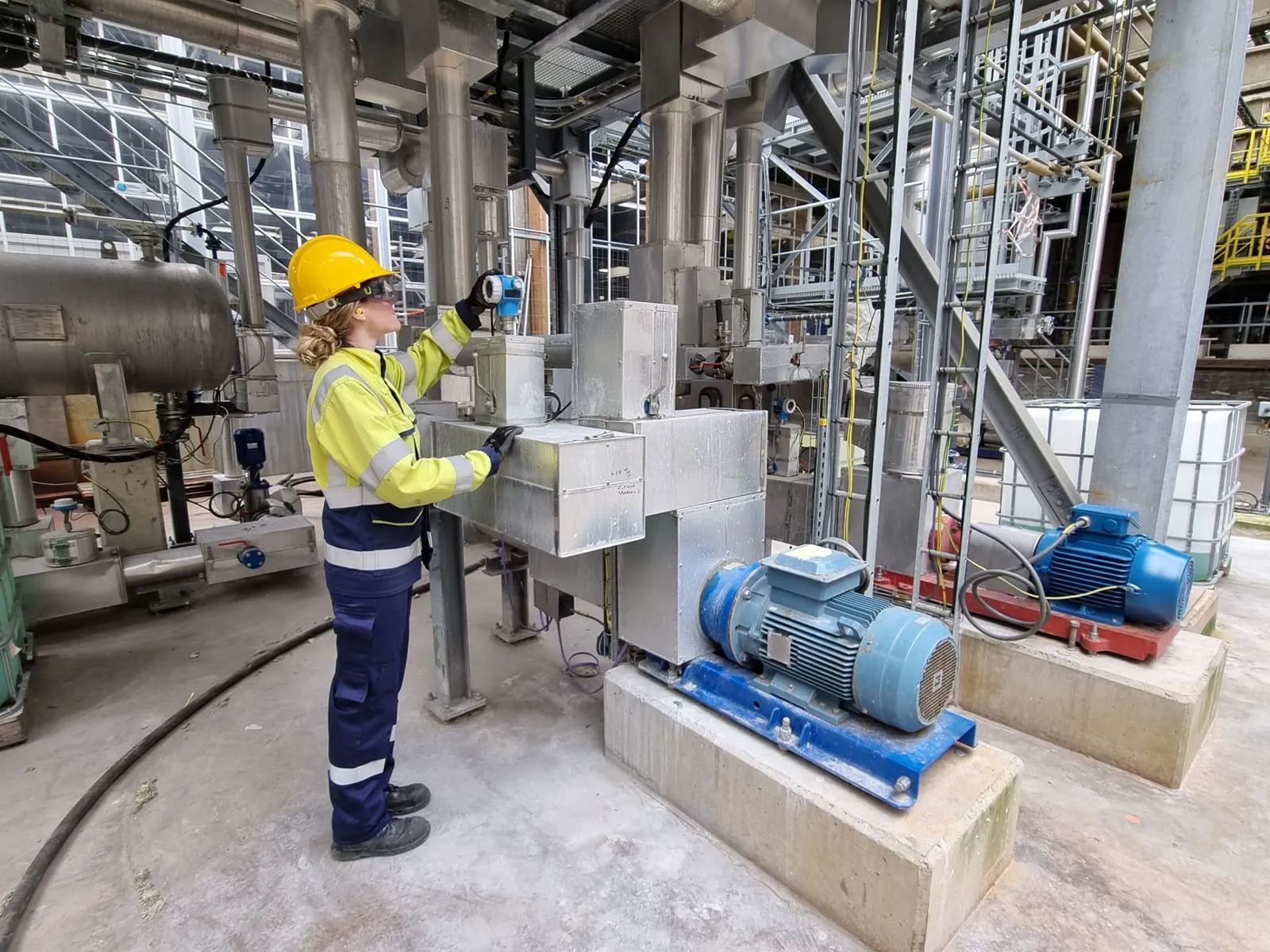
At its LDPE plant in Zwijndrecht, near Antwerp, Borealis sent the low-temperature heat of an ethylene polymerisation reactor and a low-pressure steam vent to cooling. A Qpinch Heat Transformer was added to the existing reactor setup, on a footprint of 4 by 6 metres. It combines three residual heat sources through a hot water loop and lifts them to steam at 3 to 10 barg, between 400 kW and 1.3 MW, while following the fluctuating heat of a reactor that runs more than 40 recipes. The steam boilers now produce less medium- and high-pressure steam, which lowers the site's CO₂ emissions. The figures below were provided by Qpinch for the IEA Heat Pumping Technologies case sheet, without third-party validation.
“This collaboration points to the enormous potential of open innovation between like-minded technology pioneers. We are confident that this project will be the first of many successes built on co-operation with Qpinch. For Borealis, the start-up of this unit is a landmark achievement in our mission to re-invent for more sustainable living.”
Erik Van Praet,Vice President Innovation and Technology, Borealis
One day, real numbers. Meet the companies turning carbon strategy into measurable savings — and benchmark yours against Belgium's sustainability leaders. Seats are limited.
Real ROI case studies — companies saving up to €94k/year
Benchmark your climate strategy against 100+ industry peers
Leave with an actionable, board-ready reduction roadmap